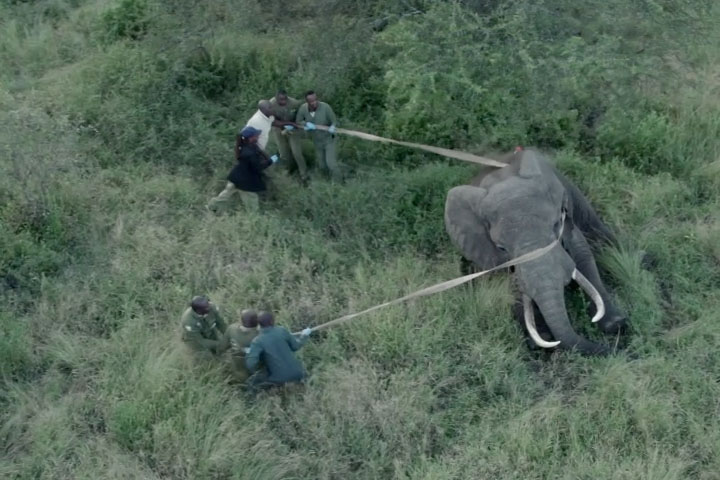
The ranger teams stood ready.
The vet had arrived.
Everything was ready to go.
There was just one problem: the elephant had disappeared.
The ranger teams stood ready.
The vet had arrived.
Everything was ready to go.
There was just one problem: the elephant had disappeared.
The Amboseli ecosystem is one of the most biodiverse landscapes in East Africa, home to more than 500 recorded bird species, ranging from nectar-sipping sunbirds to snake-stomping secretary birds. This remarkable richness is part of what makes Amboseli so iconic. Yet, with such a concentration of life, there is still much to learn.
Raptors provide a compelling example. Birds of prey play a critical role in regulating populations of rodents, reptiles, and other small animals, helping to maintain ecological balance. Due to their sensitivity to environmental change, they also serve as important indicators of ecosystem health. When raptors thrive, it often signals a resilient and functioning landscape. Improving our understanding of these species strengthens our ability to protect the habitats they depend on, as well as the many other species that share them.
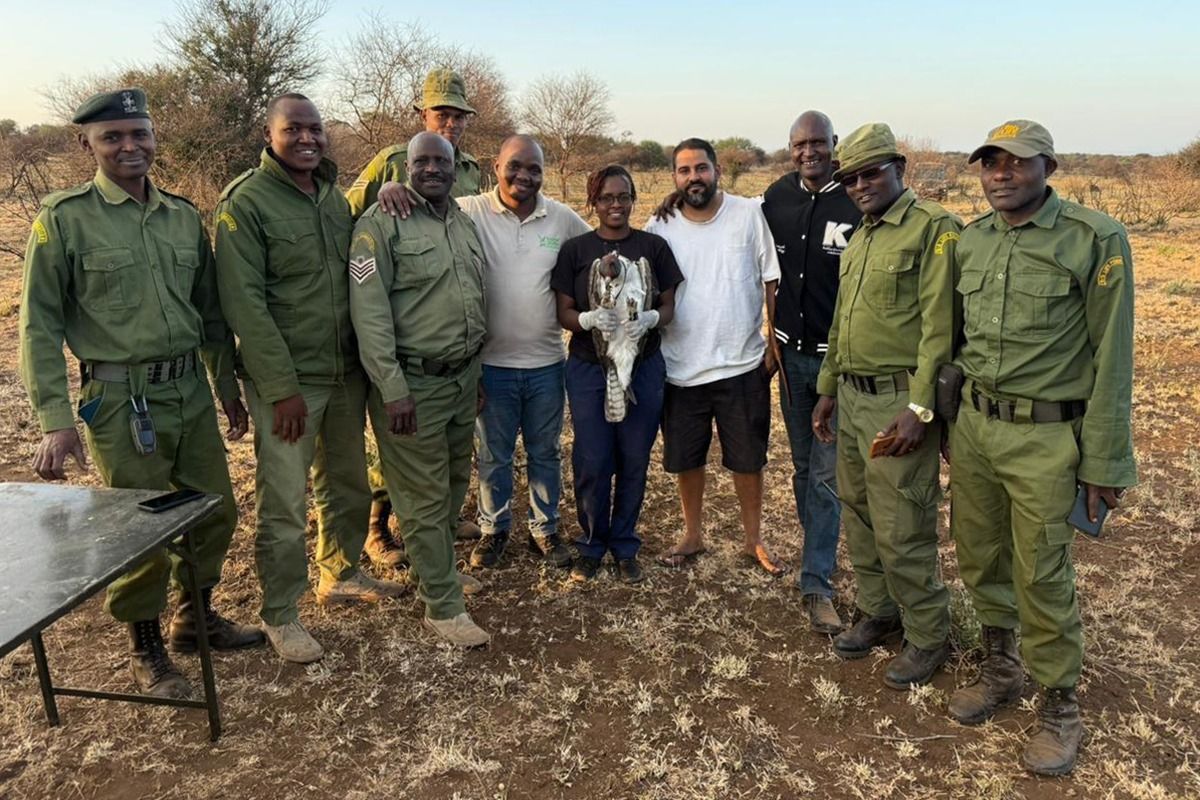
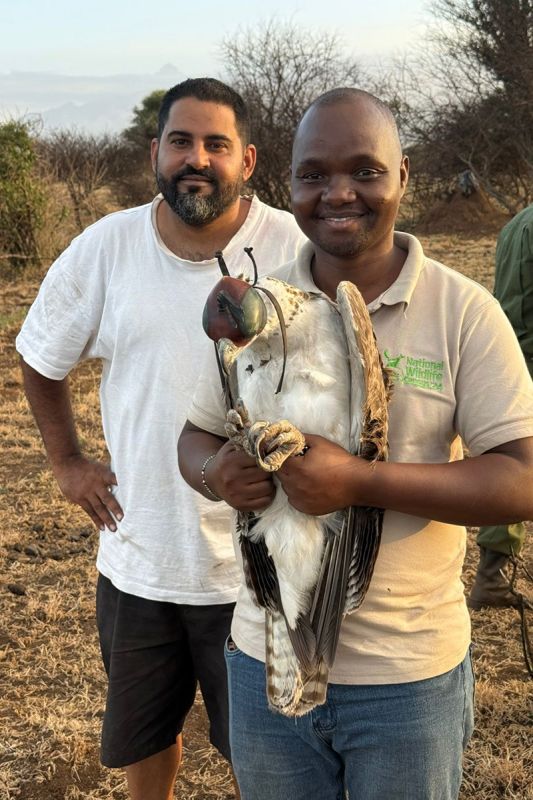
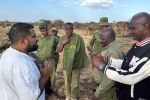
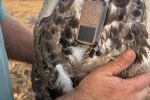
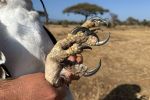
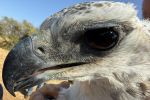
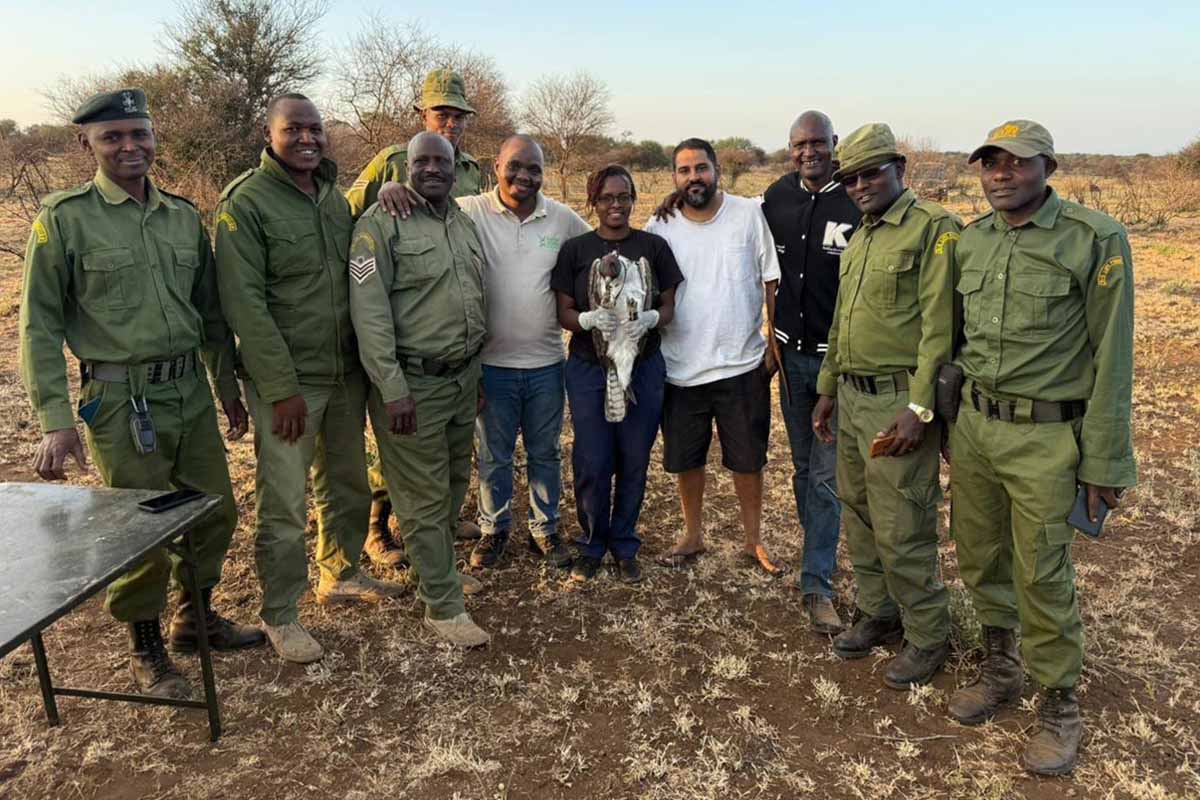
Recently, we were pleased to support an operation led by Vasco Nyaga, a scientist with the Wildlife Research and Training Institute (WRTI) and a PhD student at Wageningen University and Research, in collaboration with experts from the Kenya Bird of Prey Trust and the Kenya Wildlife Service. The team successfully tagged one juvenile and one subadult Martial Eagle.
Martial Eagles are among Africa’s largest eagles, powerful and wide-ranging hunters that require extensive territories to survive. Despite their size and strength, their populations are declining across much of the continent due to habitat loss and human disturbance and they are now listed as Endangered.
By gaining insights into their movements, particularly those of dispersing young birds which can cover tens of thousands of square kilometers, we can better identify and protect critical habitats, mitigate threats, and inform long-term conservation planning across the Amboseli landscape and beyond.
Every transmitter deployed, every data point collected, and every partnership formed brings us closer to understanding and safeguarding this extraordinary ecosystem and its biodiversity.
📸: The Kenya Bird of Prey Trust

“Many of the young leaders you see in Mbirikani today have been supported by Big Life in some way, and my story is no different.”
Meitamei Tipape is an impressive young man. He is the first Advocate from Mbirikani, where Big Life is headquartered, and one of only a handful in the Greater Amboseli Ecosystem.
As a boy, he herded his father’s cows alongside eland, zebras, and wildebeest. He personally experienced how Big Life compensates livestock owners when their animals are killed by lions and other predators.
Meitamei was a bright student and excelled in classes, but was forced to drop out of school during the devastating drought of 2009. Undeterred, he overcame these challenges and eventually earned a place at the prestigious University of Nairobi for a bachelor’s degree in law.
He came to Big Life for support, making an impassioned case. One of Big Life’s generous donors was so impressed by him that through Big Life, she sponsored the costs of his education.
After passing his exams, he was admitted to the bar last year. Now, Meitamei has opened a legal practice in Kimana, stating ‘Big Life has done a tremendous amount to help the Maasai community in Amboseli, and I am keen to repay that support both for my community as well as for conservation.”
Meitamei’s story is a powerful reminder that lasting conservation depends on investing in people. And when people thrive, conservation does too.
Pongezi kaka!
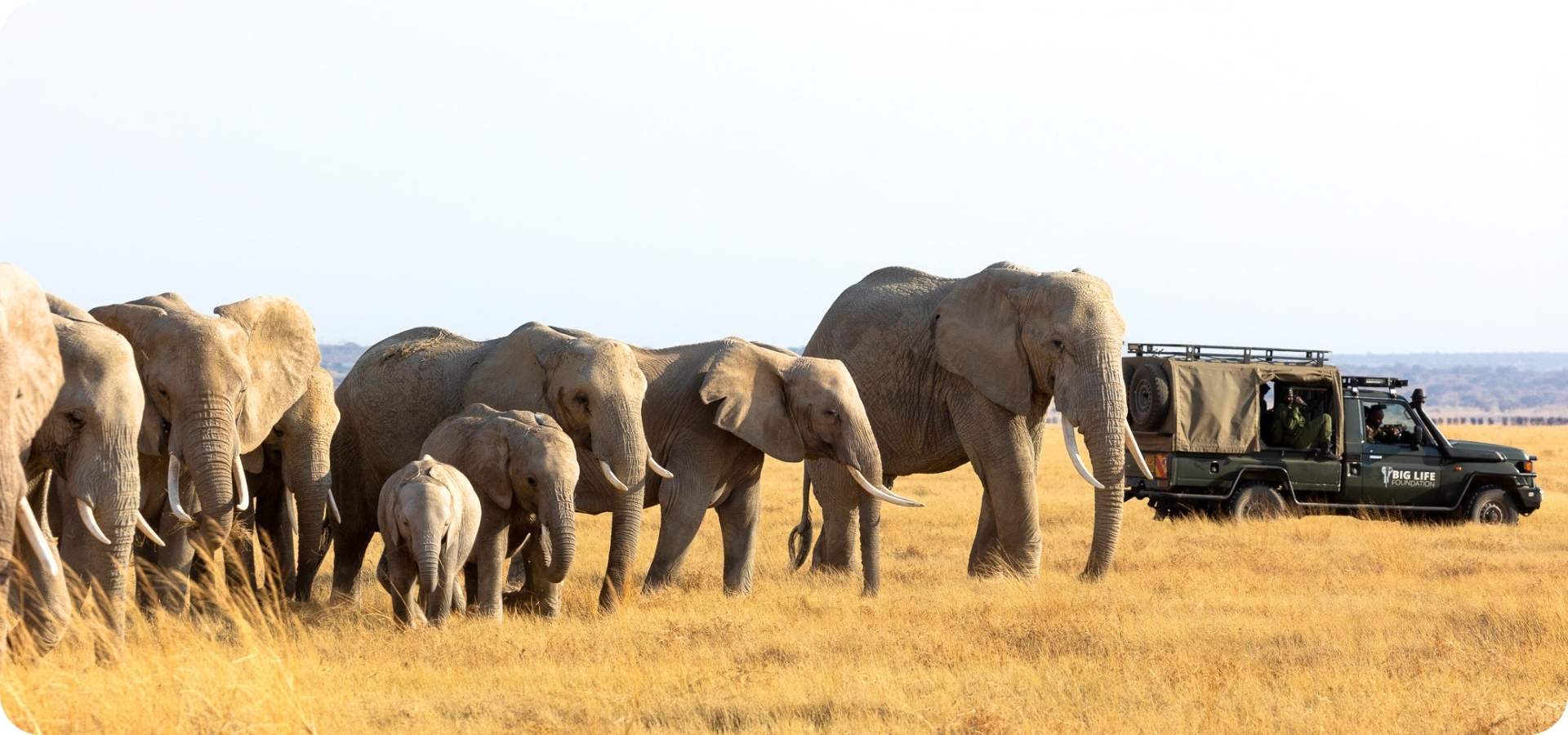
Right now, you have the chance to do something simple and powerful: give an elephant in Amboseli a full day without danger.
It costs just $17 to keep an elephant safe for one day—supporting ranger patrols, aerial surveillance, and rapid response when threats arise.
And today, your impact is doubled.
A group of committed donors has stepped forward with a matching challenge, meaning every dollar you give will be matched—doubling the protection you provide until our $85,000 goal is reached.
I want to give an elephant a day of safety
Your $17 doesn’t just protect an elephant for one day—it protects them for two.
That means:
I want to double my impact for elephants
I see every day how much this matters. Our rangers are out there consistently, removing threats, responding to incidents, and working with families who share this land with wildlife.
This kind of protection only works because it happens every single day.
And right now, as the dry season sets in, elephants are moving farther in search of food and water, making this a particularly important moment to act.
I want to help rangers protect elephants right now
If you’re able, I hope you’ll take advantage of this match and make your gift today.
It’s a rare opportunity to double your impact and give elephants in Amboseli many more days without danger.
I want to give while my gift is matched
With gratitude,
Craig Millar
P.S. The match is available for a limited time. If you’ve been thinking about giving, this is the moment—your support will go twice as far for elephants and the communities protecting them.
Page 2 of 116