
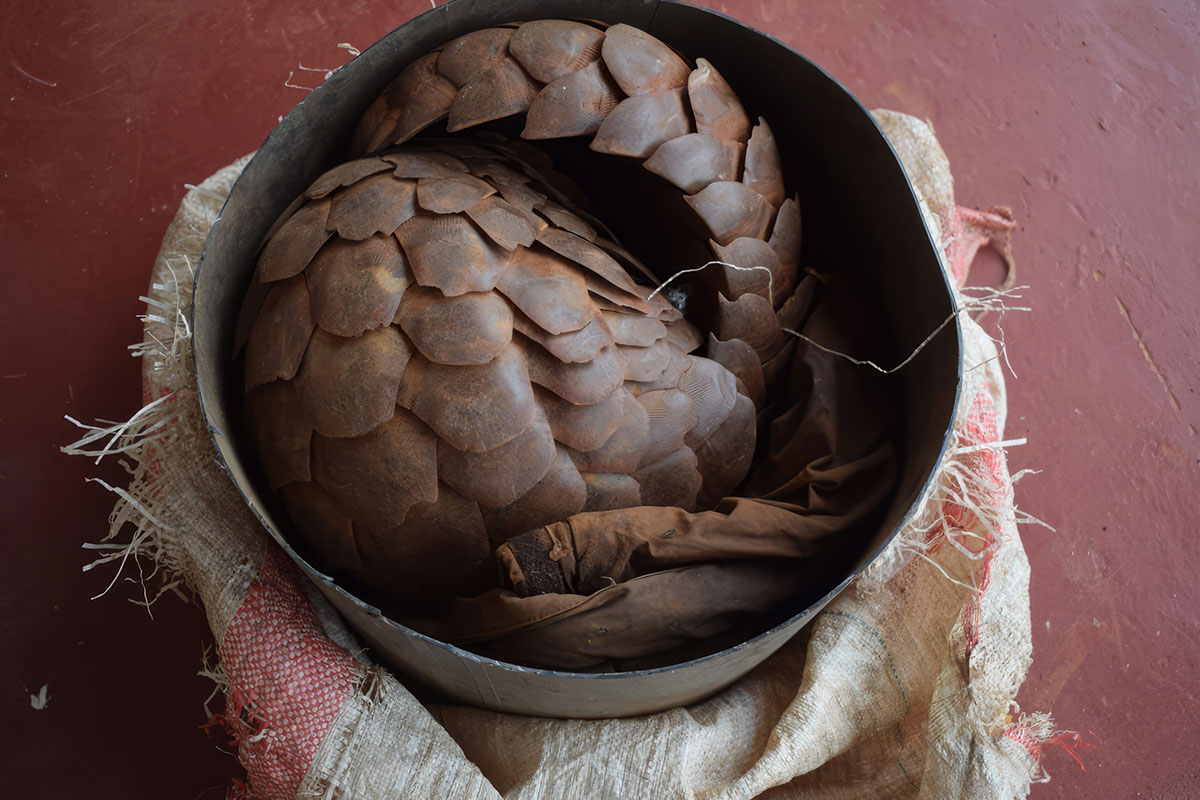
Pangolins are the most heavily trafficked mammal on Earth. Worse still, they have held this title for more than a decade.
Persecuted because of a bogus belief in East Asia that their scales carry medicinal value, all eight pangolin species found across the globe are threatened with extinction. Just like rhino horn and human fingernails, pangolin scales are made of keratin and have no medicinal value. Additionally, due to their rarity, pangolins are also sought after as a luxury food item. The black market for illegally trafficked animals like pangolins appears to know no bounds.
Here in the Greater Amboseli ecosystem, pangolins are extremely rare and only found in specific areas that are increasingly shrinking. As a result, arrests for pangolin trafficking are uncommon, comprising just 2% of all arrests we’ve supported since 2016.
Nevertheless, our intelligence network is always listening for suspicious activity. Late last year, we received word of an individual trying to sell a live pangolin.
After two months of tracking, the suspect was finally arrested towards the end of December. The pangolin was still alive and in decent enough condition to be handed over to KWS for eventual release.
The suspect pleaded guilty, and as per Kenya’s Wildlife Conservation and Management Act, they have been sentenced and will serve three years in prison for possessing and intending to trade in a live wildlife species.
While pangolins may not be a major focus of our anti-poaching work because of their rarity, they are an important part of the Amboseli ecosystem and a precious reminder that we share a planet with some of the most incredible animals.
We will do all we can to ensure wildlife continues to thrive here in Amboseli. Thank you for your support.