




Last year, in a highly efficient joint operation over two days, Big Life and partners successfully fitted GPS tracking collars on eight elephants.
We collared four crop-raiding bulls near Amboseli National Park (NP), to monitor their movements and intervene before they come into conflict with farmers. The other four were from a population we know little about…
The elephants of the Chyulu Hills and surrounds are enigmatic and much shyer than their famous counterparts from Amboseli NP. With so many changes occurring in the ecosystem, we collared two Chyulu males and two females to learn more about their movements and needs, and therefore design better strategies to protect them.
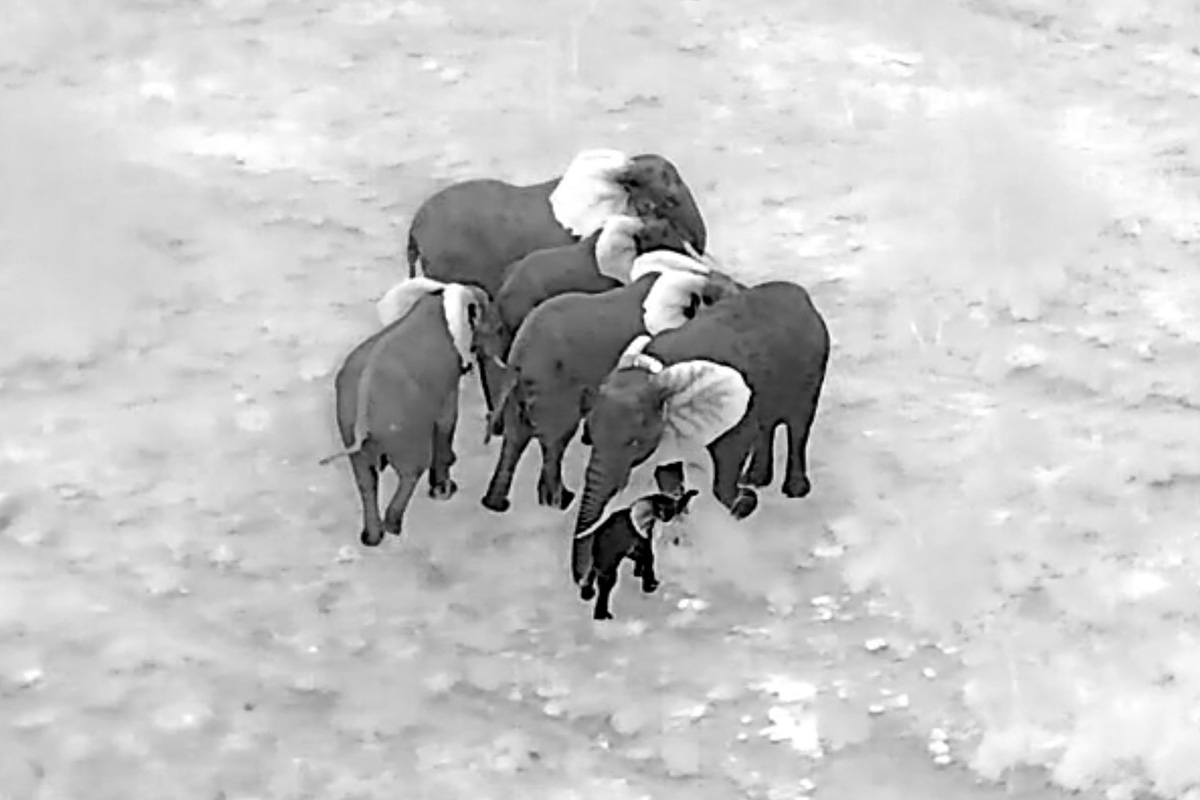
Months later, we noticed that one of the females had barely moved in four days. This was very unusual, as they had been traveling to water every two days. Anxious to check on her, we sent our drone unit to investigate.
The thermal images revealed a wonderful sight: a tiny calf trailing her mom, their family packed tightly around them, standing guard. Exciting as this was it was a complete surprise, had we known that she was pregnant she would not have been darted.
This birth comes alongside the 220 plus calves born in Amboseli last year, all part of an exciting national upward trend for elephants.
We are already seeing fascinating data from the collared Chyulu elephants, including confirmation that they do not venture to Amboseli NP (at least not frequently) and appear to have stronger geographic overlap with the Tsavo population.
The risks these elephants face are numerous, but thanks to your support, we can better protect them and keep a close eye on this young family going forward.