
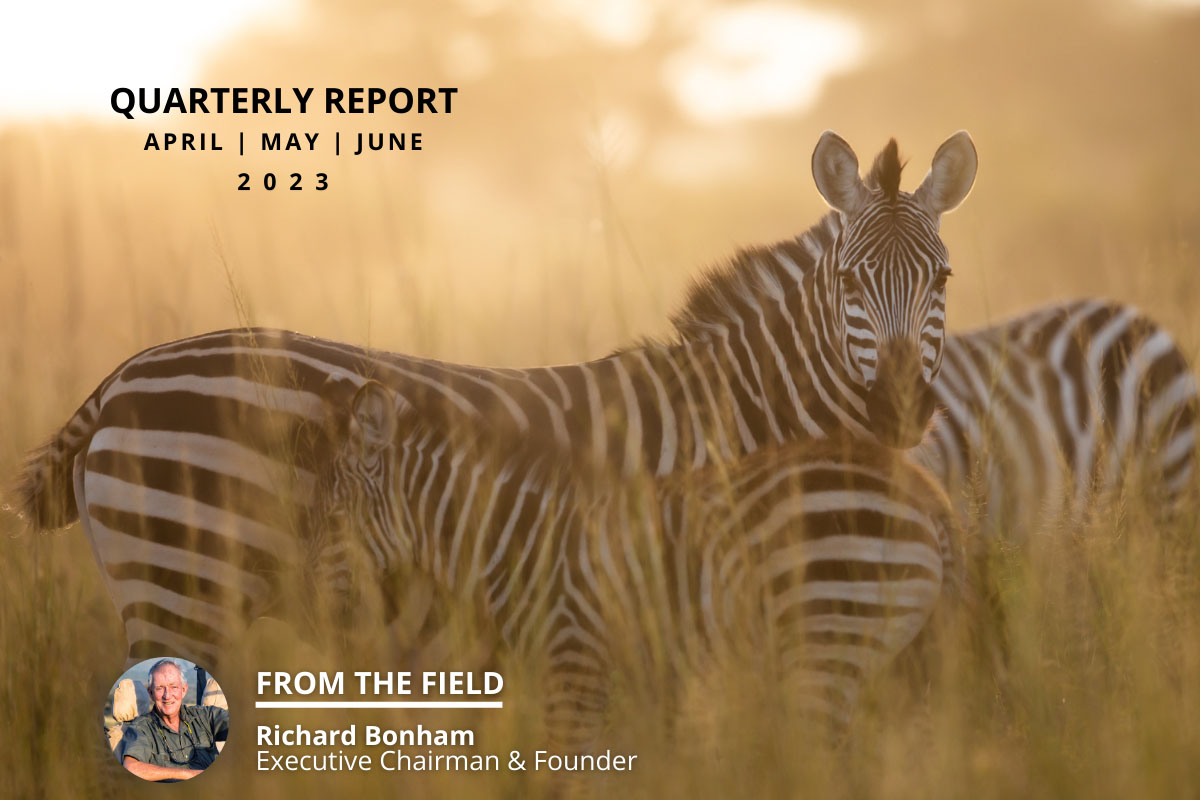
 RICHARD BONHAM ON BIG LIFE'S WILDLIFE HABITAT PROTECTION EFFORTS
The impressive numbers in this report reflect the hard work of our 381 rangers. From arresting bushmeat poachers to chasing lions away from human settlements, to helping confiscate illegal ivory and sandalwood, their efforts are measurable, and the numbers tell the story.
But an increasing amount of Big Life's work is much harder to portray, and that is our effort to protect wildlife habitats. As previously communally-owned Maasai ranches continue to subdivide and privatize, we have invested heavily in supporting our partner communities in their land-use planning and legal processes for gazetting those plans and issuing land titles correctly.
Although your eyes would glaze over at the sheer number of hours spent in meetings discussing all the finer details, the efforts are yielding results. The number of conservation land leases is steadily ticking up and we have signed agreements with over 2,100 landowners (and counting), who own some 70,000 acres of land that is now protected for wildlife.
The threat to Amboseli comes largely from outside developers, who are buying land and converting it to farming and other uses that are not sustainable in a semi-arid environment, nor compatible with the local livestock-keeping culture and economy. There is space for all types of economic activity in appropriate areas in Amboseli, farming included, but conflicting activities can only co-exist if plans are followed.
Political support for these plans is thus extremely important, and we were very encouraged by the recent Presidential Directive from Kenya’s President Ruto to halt issuance of licenses for development in key wildlife areas until appropriate planning is done. The local Kajiado County Government has expressed support for the President's sentiments, and the local county office of the National Environment Management Authority (NEMA) is already acting on it.
In Amboseli, the planning is done. Now those plans need to be enforced. Conservation and livestock farming make a huge economic contribution in the drylands of Kenya and will be the most adaptable use of land as we deal with climate change. Natural habitats are important for wildlife AND for people. We’re extremely grateful that the county and national Kenyan government sees this bigger picture and are taking the issue seriously. Big Life certainly is.
Thank you, as always, for your support.
Richard Bonham
Executive Chairman & Founder – Big Life Foundation Kenya
SEE THE FULL 2ND QUARTERLY REPORT


 It all started a few days ago, outside of Big Life’s area of operation, within Motikanju Conservancy on Kuku Group Ranch, where a herd of elephants were near a crop of ripe tomatoes, looking interested. The farmer was rightly very nervous of his crop getting destroyed and attempted to push 7 elephants away from his farm with not much more than a shovel and a flashlight. What resulted was a tusk through the farmer’s gut and a life-threatening rush to the nearest hospital in a Big Life ranger vehicle.
 The farmer is recovering, and very lucky to be alive. And the elephants are equally lucky, and will hopefully stay away from farms.