Big Life Foundation

DONATE

Big Life Foundation

GET UPDATES DONATE

Big Life Foundation

GET UPDATES DONATE

  • WHAT WE DO menu down arrow
      • Back
      • PROGRAMS
      • rangers
        WILDLIFE
          PROTECTION
      • PROGRAMS
      • WILDLIFE PROTECTION
      • ANTI-POACHING
      • WILDLIFE CRIME /
            ANTI-TRAFFICKING
      • RHINO PROTECTION
      • TRACKER DOG UNIT
      • Back
      • Lions
        HUMAN-WILDLIFE
          CONFLICT
      • HUMAN-WILDLIFE CONFLICT
      • PREDATOR COMPENSATION
      • MAASAI OLYMPICS
      • HUMAN-ELEPHANT
            CONFLICT MITIGATION
      • Back
      • habitat
        HABITAT
          PROTECTION
      • HABITAT PROTECTION
      • Securing Wildlife Habitat
      • Rangelands Management
      • REDD+ Carbon Project
      • Back
      • Student
        COMMUNITY
         
      • COMMUNITY
      • Education
      • Healthcare
  • HOW WE DO IT menu down arrow
      • Back
      • THE RANGERS
        rangers
      • The Rangers
      • Back
      • PARTNERS
        elephants
        FINANCIALS
        zebras herders
      • Partners
      • Financials
  • WHERE WE WORK menu down arrow
      • Back
      • INTERACTIVE MAP
      • INTERACTIVE MAP
        Area of Operation
  • WHO WE ARE menu down arrow
      • Back
      • Big Life Kenya Big Life Kenya
      • Big Life USA
      • Big Life Canada Big Life Canada
      • Big Life UK Big Life UK
      • Back
      • About Big Life
      • Mission & Vision
      • History
      • Awards & Recognition
      • Back
      • Co-Founders
      • Ambassadors
      • Contact Us
  • PROGRAM UPDATES menu down arrow
      • Back
      • BIG LIFE NEWS
        rangers elephants
      • Big Life News
      • Photos From The Field
      • Short Films Gallery
      • In the Media
      • Operational Reports
      • 2025 Impact Report
      • Radio Room
      • Back
      • 2025 IMPACT REPORT
        Operational Reports
      • Back
      •  PHOTOS FROM THE FIELD
         SHORT FILMS GALLERY
        IN THE MEDIA
        OPERATIONAL REPORTS
        RADIO ROOM
  • SHOP menu down arrow
      • Back
      • BLF Shop
        BIG LIFE
        MERCHANDISE
      • Big Life Merchandise
  • GIVING menu down arrow
      • Back
      • Giving Essentials
        Manage Your Monthly Gift
        Give Monthly
        Start a Fundraiser
        Gift Catalog
      • GIVING menu down arrow Essentials
      • Manage Your Monthly Gift
      • Give Monthly
      • Gift Catalog
      • Start a Fundraiser
      • IRA Charitable Rollover
      • Stock Gifts
      • Leave a Gift In Your Will
      • Other Ways to Give
      • Back
      • IRA Charitable Rollover
        Stock Gifts
        Leave a Gift in Your Will
        OTHER WAYS TO GIVE
  • BIG LIFE MERCHANDISE
  • GET UPDATES
  • DONATE

THE SNARE THAT (NEARLY) BROKE THE CAMEL’S BACK

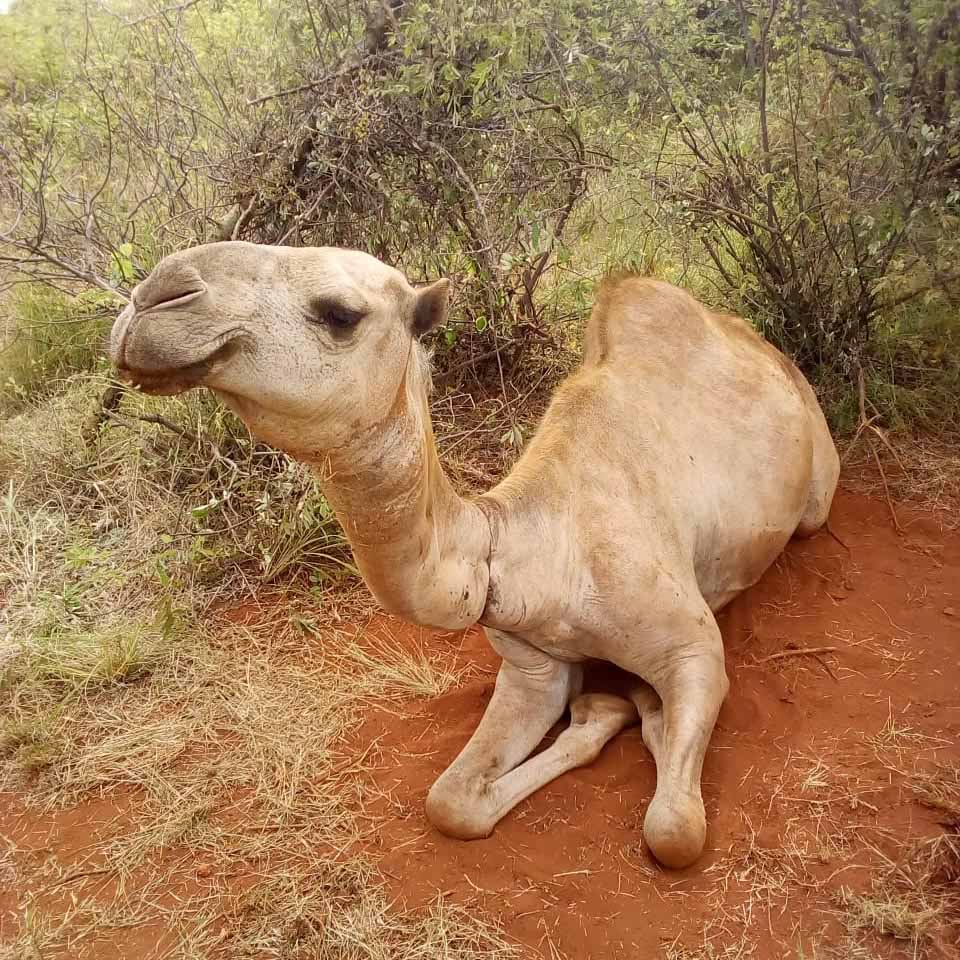
200529 camel waits to have snare removed2

There are few ways through a snare line. Poachers will string up dozens of these simple killing devices across commonly-used wildlife corridors, and like fishing nets spanning a river, one of them will usually catch something.

It’s as cheap and easy a way to poach wild animals for bushmeat, as it is ruthless and indiscriminate. If your head fits through the hole, you’re in trouble, as this camel recently discovered.
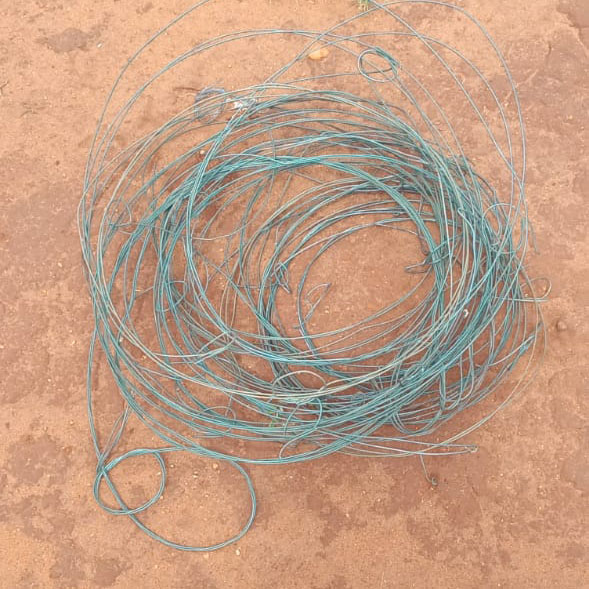
200529 big life rangers recovered snareSnares are usually set to catch victims by the neck as they walk through. Wild animals will struggle to break free, pulling the snare tighter and tighter and often strangling themselves in the process. This camel, obviously used to being tied up, adopted a far calmer approach to the problem and simply lay down to wait for a human.

Luckily some came along, in the form of rangers conducting a de-snaring sweep of the area. This was part of a bigger operation over the last couple of weeks, where Big Life rangers partnered with the Kenya Wildlife Service to patrol a large area in the far reaches of Big Life’s operating area, along the western edge of Tsavo West National Park.

Community informers had reported an increase in snares in the area, and rangers have now pulled out and destroyed 45 (and counting). We are receiving more and more of these reports, particularly on the borders of our operating area, which suggests that bushmeat poaching is on the increase.

It is as we’ve feared. The economic impacts of COVID-19 are being felt in Kenya as they are across the world, and it seems that many are turning to poaching. We hope that this COVID-19 storm will pass quickly. Until it does, our entire ranger network is on high alert.
A BIG BABY WITH A BIG PROBLEM

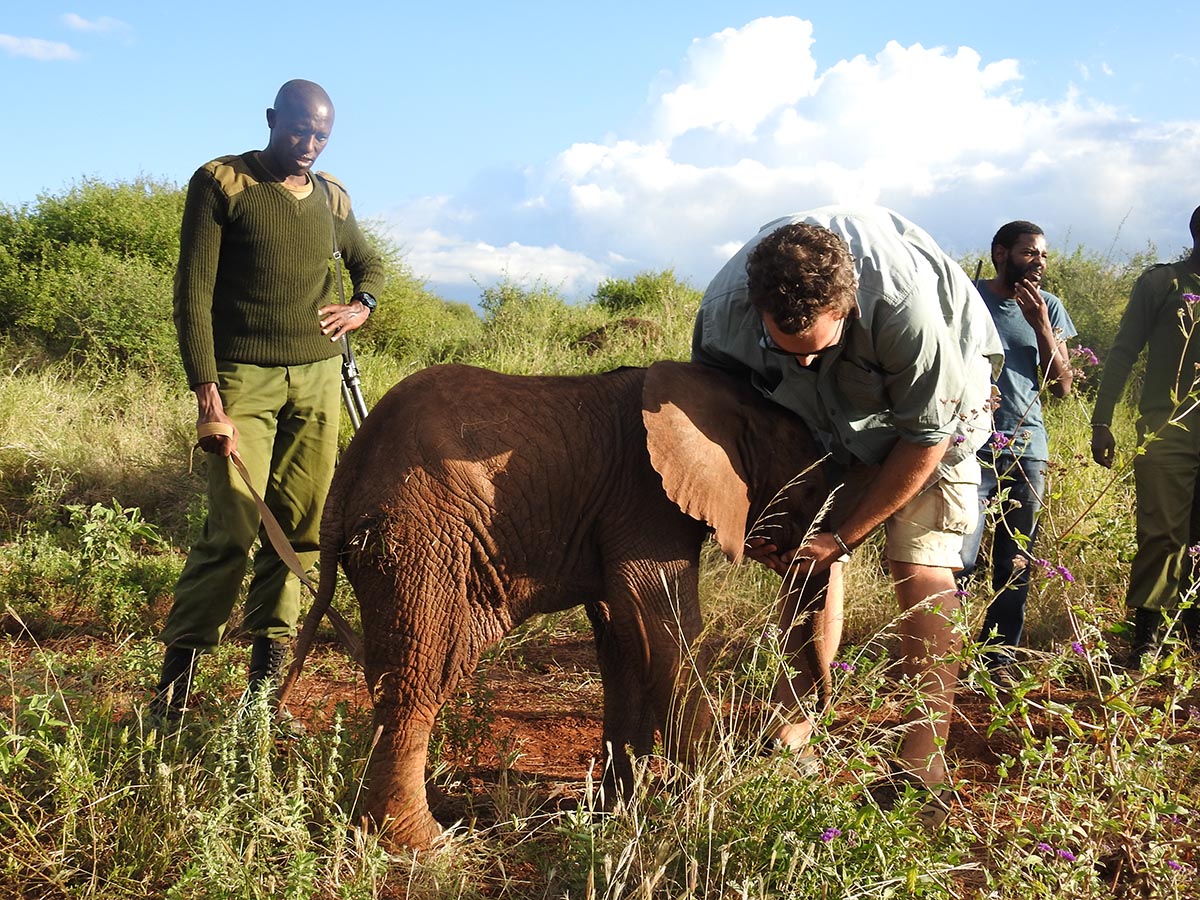
200515 orphan elephant is rescued big life foundation

At the water hole, a herd of elephants gathered for a drink. A tiny baby elephant attempted to join them, but was repeatedly pushed away. Eventually, the herd started to move on, and when the calf attempted to follow, he was rejected again, pushed back and abandoned, all alone. 

At this point, the owners of the Amboseli Bush Camp, who had been observing the interaction, realized that something was very wrong and called Big Life for help. Nearby rangers were dispatched immediately on a motorbike to survey the area, and they confirmed that the baby elephant was lost, and that his family was nowhere to be found.

He was very thin and looked less than a couple of months old, still pink behind the ears. The Kenya Wildlife Service was alerted, and the Sheldrick Wildlife Trust was called in for assistance. Big Life’s rangers and Head of Security Craig Millar stayed with the calf until their support helicopter arrived, keeping him calm and safe.

He was feisty and strong throughout the rescue process, refusing any of the water offered. But once in the care of the highly experienced keepers at the Sheldrick’s Kaluku Field Headquarters, he took four bottles of milk. He’s been named Sabuk, meaning big/large in Maa, as they believe that he’s only 4-6 weeks old and quite big for his age.

Big Life rangers have since done a thorough search of the area and found a female elephant carcass not too far from where the baby was discovered, but it’s impossible to say for sure if this was his mother. We’re just glad he was discovered before lions found him, and hopefully he’ll recover and eventually be rehabilitated back into the wild.

Director's Note - Q1 2020

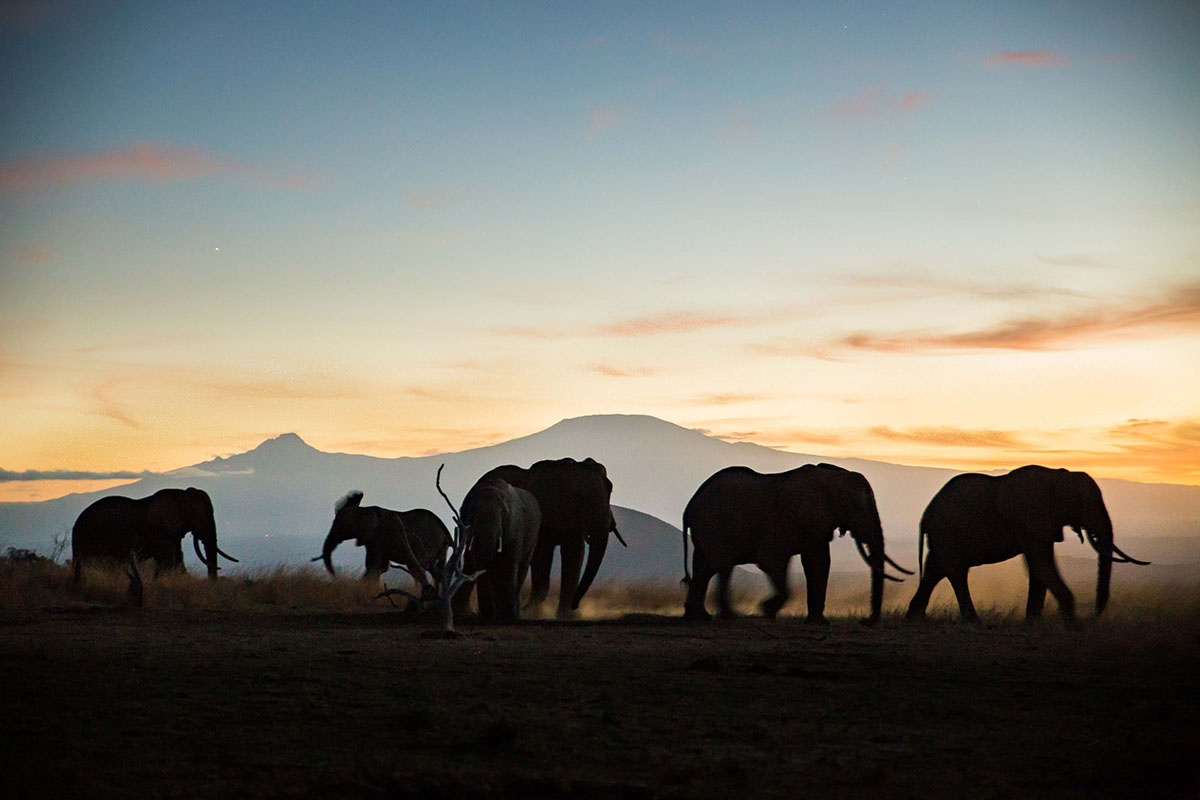
200503 a herd of elephants at dusk in amboseli

This year has not gone according to anyone’s plans. We have never experienced a situation quite like Covid-19 has handed us, but our rangers, our staff, and our programs are resilient and very well prepared to handle the challenges we’re currently experiencing.

In the wake of the pandemic, tourism has evaporated across Africa. We feel it acutely in Kenya, as the economy of the ecosystem where Big Life operates is so heavily reliant upon it. Those now out-of-work are looking for other ways to make ends meet, which is why our wildlife security programs are more important than ever. We will not tolerate poaching activity in our area of operation, and the poachers know it. To minimize their exposure, our rangers are staying with their outposts and receiving fresh provisions remotely.

Our headquarters is quiet these days but not closed. Only limited, senior personnel are based out of the office, and those who can are working remotely.

Our community programs have been impacted the hardest. Schools of course are closed. Unfortunately, our corner of the world is not set up yet for remote learning. Our mobile health clinics are also on hold, due to the fact that hundreds gather on such days. There’s simply not enough PPE to hold the clinics safely. But our community health volunteers are out in force, disseminating information about how to prevent the spread of the virus, and are provisioned with soap and facemasks.

We’re disappointed as well to have to postpone the Maasai Olympics until 2021. The games add positive energy to our community, something we could all use more of right now. But it’s the only safe thing to do, and as always, the safety of our community comes first.

I’ve been running conservation initiatives in the Chyulu Hills area for 30 years, 10 of those under the mantle of Big Life. I have seen unspeakable tragedies committed against our wildlife but today, there are real, measurable successes across the ecosystem, beyond what I could have ever imagined when we got started. We will not lose momentum in the face of this virus. We will not slack in our commitment to protect the wildlife and wild lands for the benefit of us all.

Thank you, as always, for your support.

Richard Bonham
Director of Operations, Big Life Kenya

SEE THE FULL 1ST QUARTERLY REPORT

Photo: Jeremy Goss

THE IVORY SCAVENGER

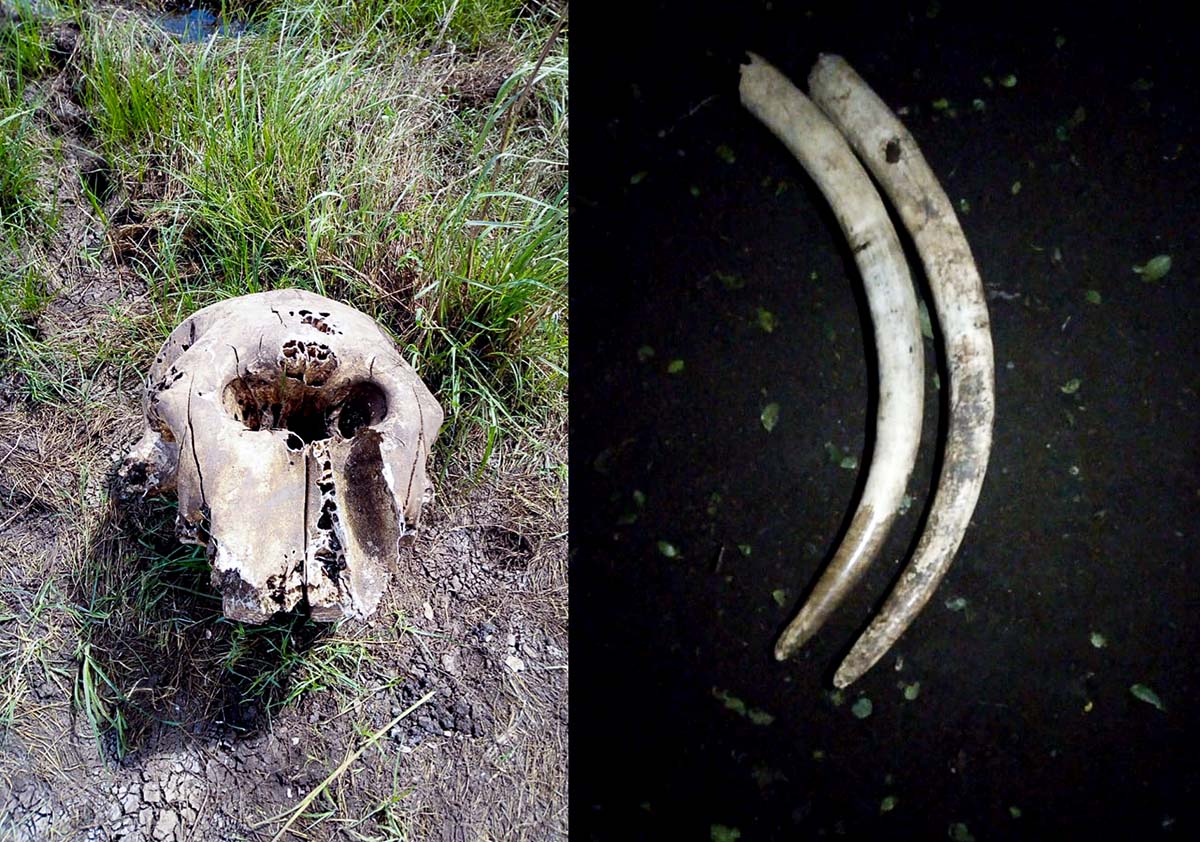
200429 an elephant skull and tusks recovered

Every scavenger that visits an elephant carcass wants something. But only one is interested in the elongated white shapes that emerge from the skull.

This particular scavenger thought that he was alone. It was a reasonable assumption, given that the giant bones lay strewn miles from anywhere. The old elephant apparently died after getting stuck in thick mud, and with access to the swampy area impossible during the past rainy season, no-one had found the carcass yet.

As a result, and unusually, the two tusks were still embedded in the skull. The man took note, a plan forming in his mind. He returned to his livestock, but didn’t notice another pair of eyes watching him. A second herder, just far enough away to remain unseen.

The second herder later went to see what had been of so much interest to the first. He also took note of the tusks and returned to his herd, but with different intentions. He planned to return the following morning without his livestock, collect the ivory and hand it into Big Life.

On his return early the next day, he realized immediately that something was wrong.

One tusk was missing. Someone had beaten him to it, and the first herder was the obvious suspect. So to Big Life he delivered one tusk and information.

Undercover informers kept a close eye on the first herder, waiting for a suspicious move. Days went by and he did nothing with the tusk. As is often the case with opportunists, the ivory scavenger had taken the tusk without a plan, and had no immediate buyers to sell to.

Rather than risk losing the ivory into the supply chain, and knowing that this was an opportunist and not a wanted poacher, Big Life made the decision to confront the man. With a hint of a wry smile, he cooperated and immediately gave up the tusk. As with all ivory recoveries, it was handed over to the Kenya Wildlife Service (KWS) together with the first tusk.

Catching poachers is important, but it is only by keeping all ivory out of the trade that we can strangle it completely. Thanks to a huge effort in which Big Life has played a central role, elephant poaching has been controlled across the Greater Amboseli ecosystem. But elephants still die from a variety of causes, and the ivory must be recovered and kept from falling into the wrong hands. Thanks to our extensive ranger and aerial patrols, and intelligence operations like this one, over the last five years we have worked with KWS to consistently maintain an 80%+ ivory recovery rate in our core area of operation from elephant carcasses.

When it comes to elephant tusks, the old adage of “finder’s keepers” does not hold true. Those who decide to take the chance should know that in Amboseli, there is always someone watching.

  • WHEN LION MET OWL
  • THE POACHERS WHO SHOULD HAVE STAYED AT HOME
  • FROM KILI TO THE HIMALAYAS
  • TOMORROW’S CONSERVATION GAMECHANGERS
  • ONE BABY ELEPHANT LOST AND FOUND
  • OF HANDBAGS AND HOPE FOR THE FUTURE
  • SMALL BUT MIGHTY
  • THE SHUKA STANDS OUT
  • 8 LUCKY RHINOS
  • Saved By The Books
  • THE PATH FORWARD
  • PART TIME RANGERS X BIG LIFE FOUNDATION PARTNERSHIP
  • LION PRIDE IN HONG KONG
  • A LION IS DEAD, NOW WHAT?
  • REJECTED!
  • WITH GREAT POWER COMES GREAT RESPONSIBILITY
  • Big Life x Popsocket Collaboration
  • THREE TINY, HUGE REASONS TO CELEBRATE ON WORLD LION DAY
  • HOW TO FILL A CHURCH ON A WEDNESDAY
  • Be a Wildlife Warrior for World Elephant Day
  • A GIRAFFE IS NOT A GIRAFFE
  • A MOTHER’S WORST NIGHTMARE
  • Director's Note - Q2 2019
  • THE (PREVIOUSLY SHORT) LIFE OF AN AMBOSELI LION
  • SURROUNDED BY SPEARS
  • CONSERVATION’S NEW BATTLEGROUND
  • GIRAFFE ON A MOTORBIKE
  • BORN TO BE BIG
  • A STORY FROM A HAPPIER WORLD
  • LUCKY LIONESS SURVIVES CLOSE SHAVE
  • A BANDIT’S HAVEN NO LONGER
  • Hope in Spite of Bad News
  • A Long-Awaited Journey
  • Director's Note - 2018 Annual Report
  • Poachers Caught Off-Guard in Northern Tanzania
  • Director's Note - Q1 2019
  • ELEPHANTS HAVE FACES
  • BACK TO BOOT CAMP
  • BABY ELEPHANT RESCUED FROM STICKY PREDICAMENT
  • THREADING ELEPHANTS THROUGH THE EYE OF A NEEDLE
  • DIRECTOR'S NOTE - Q4 2018
  • A TALE WITH A LIFESAVING TWIST
  • THE SIGNIFICANCE OF ONE YOUNG WOMAN’S 7 KM WALK
  • QUAGGA GREEN LABEL x BIG LIFE FOUNDATION 2019 PARTNERSHIP
  • A BIG MILESTONE FOR A BIG ELEPHANT - HAPPY BIRTHDAY TIM
  • 4th Maasai Olympics Highly Successful
  • Tough Love Tracker Dogs
  • The Equation That Doesn't Sleep
  • Working with Nature - One Heart Farm
  • Director's Note - Q3 2018
  • The Gold Rush
  • Mobile Care, Lasting Impact
  • One Step Closer to the Finish Line
  • Caught on Camera
  • A Herculean Effort
  • The Real Deal
  • WORLD LION DAY
  • DIRECTOR'S NOTE - Q2 2018
  • AT THE STARTING LINE TO SUPPORT THE FRONT LINE
  • TODAY, WE STAND WITH RANGERS
  • THE VOICE ON THE LIFELINE
  • NDERU – A TRUE ORIGINAL
  • Let the Games Begin!
  • BIG LIFE’S CANINE RANGERS
  • WHO IS THIS MAN?
  • TAKING THE PULSE OF AMBOSELI
  • THE TALLEST LAND ANIMALS
  • COMMITTED TO COMMUNITIES
  • DIRECTOR’S NOTE – Q1 2018
  • BABY STEPS TOWARD RHINO RECOVERY
  • DIRECTOR’S NOTE - 2017 Year in Review
  • HOW TO GROW A LION CUB
  • HONORING THE WOMEN OF BIG LIFE
  • THE LION SLEEPS TONIGHT
  • NEW FILM ON THE FENCE
  • LETTER OF APPRECIATION FROM KENYA WILDLIFE SERVICE
  • AN UPDATE FROM OUR DIRECTOR (Q4 2017)
  • A Memory of Elephants
  • WILD SHIRTS FOR WILDLIFE – ONE WEEK ONLY
  • EXPEDITION UNKNOWN with Josh Gates
  • Kenyan environmental tribunal protects open rangeland
  • From Poacher to Protector: Sergeant Mutinda Ndivo
  • Big Life Wins Rhino Conservation Award
  • STORIES FROM THE FRONTLINES: CORPORAL MEJAI OLE’KUMARI
  • STORIES FROM THE FRONTLINES: CORPORAL OLCHURIE KAPASEI
  • STORIES FROM THE FRONTLINES: CONSTABLE SESEI LOORMONI
  • Elephants in the Crosshairs

Page 96 of 118

  • 91
  • 92
  • 93
  • 94
  • 95
  • 96
  • 97
  • 98
  • 99
  • 100

Amboseli's elephants need your help
Our rangers are on the ground every day — removing snares, resolving human-wildlife conflict, and keeping herds safe. But we can't do it without support.
DONATE

Get Updates
From the field to your inbox: Program news, partnership opportunities, and exclusive event invites — delivered periodically throughout the year. No spam, ever.
SUBSCRIBE

FacebookLinkedInInstagramYouTube
 
FacebookLinkedInInstagramYouTube
 
Charity Navigator Four Star
Best in America
Candid Platinum Transparency 2026
Charity Navigator Four Star
Best in America
Candid Platinum Transparency 2026
Big Life Foundation USA
720 Seneca Street, Suite 107
Seattle, WA 98101
USA
info@biglife.org
+1 971 322 3326
Big Life Foundation Canada
17474 Humber Station Road 
Caledon Ontario L7E 0Z2
Canada
Canada@biglife.org
+1 416 624 6568
Big Life UK
c/o Chapel & York Ltd 
Unit 12 Ladycross Business Park 
Hollow Lane 
Dormansland 
Surrey RH7 6PB
United Kingdom
UK@biglife.org
Sign up for our e-newsletter
Learn more about our programs and partnership opportunities.
GET UPDATES
  •  Privacy Policy  •  Cookie Policy  •  Terms of Service  •  GDPR Compliance  •  Contact
Big Life is registered in the USA as a 501(c)(3) charity (EIN 27-3455389). Donations are tax deductible as permitted by law. BIG LIFE FOUNDATION® is a registered U.S. trademark of Big Life Foundation USA.
Donate