Big Life Foundation

DONATE

Big Life Foundation

GET UPDATES DONATE

Big Life Foundation

GET UPDATES DONATE

  • WHAT WE DO menu down arrow
      • Back
      • PROGRAMS
      • rangers
        WILDLIFE
          PROTECTION
      • PROGRAMS
      • WILDLIFE PROTECTION
      • ANTI-POACHING
      • WILDLIFE CRIME /
            ANTI-TRAFFICKING
      • RHINO PROTECTION
      • TRACKER DOG UNIT
      • Back
      • Lions
        HUMAN-WILDLIFE
          CONFLICT
      • HUMAN-WILDLIFE CONFLICT
      • PREDATOR COMPENSATION
      • MAASAI OLYMPICS
      • HUMAN-ELEPHANT
            CONFLICT MITIGATION
      • Back
      • habitat
        HABITAT
          PROTECTION
      • HABITAT PROTECTION
      • Securing Wildlife Habitat
      • Rangelands Management
      • REDD+ Carbon Project
      • Back
      • Student
        COMMUNITY
         
      • COMMUNITY
      • Education
      • Healthcare
  • HOW WE DO IT menu down arrow
      • Back
      • THE RANGERS
        rangers
      • The Rangers
      • Back
      • PARTNERS
        elephants
        FINANCIALS
        zebras herders
      • Partners
      • Financials
  • WHERE WE WORK menu down arrow
      • Back
      • INTERACTIVE MAP
      • INTERACTIVE MAP
        Area of Operation
  • WHO WE ARE menu down arrow
      • Back
      • Big Life Kenya Big Life Kenya
      • Big Life USA
      • Big Life Canada Big Life Canada
      • Big Life UK Big Life UK
      • Back
      • About Big Life
      • Mission & Vision
      • History
      • Awards & Recognition
      • Back
      • Co-Founders
      • Ambassadors
      • Contact Us
  • PROGRAM UPDATES menu down arrow
      • Back
      • BIG LIFE NEWS
        rangers elephants
      • Big Life News
      • Photos From The Field
      • Short Films Gallery
      • In the Media
      • Operational Reports
      • 2025 Impact Report
      • Radio Room
      • Back
      • 2025 IMPACT REPORT
        Operational Reports
      • Back
      •  PHOTOS FROM THE FIELD
         SHORT FILMS GALLERY
        IN THE MEDIA
        OPERATIONAL REPORTS
        RADIO ROOM
  • SHOP menu down arrow
      • Back
      • BLF Shop
        BIG LIFE
        MERCHANDISE
      • Big Life Merchandise
  • GIVING menu down arrow
      • Back
      • Giving Essentials
        Manage Your Monthly Gift
        Give Monthly
        Start a Fundraiser
        Gift Catalog
      • GIVING menu down arrow Essentials
      • Manage Your Monthly Gift
      • Give Monthly
      • Gift Catalog
      • Start a Fundraiser
      • IRA Charitable Rollover
      • Stock Gifts
      • Leave a Gift In Your Will
      • Other Ways to Give
      • Back
      • IRA Charitable Rollover
        Stock Gifts
        Leave a Gift in Your Will
        OTHER WAYS TO GIVE
  • BIG LIFE MERCHANDISE
  • GET UPDATES
  • DONATE

LION PRIDE IN HONG KONG

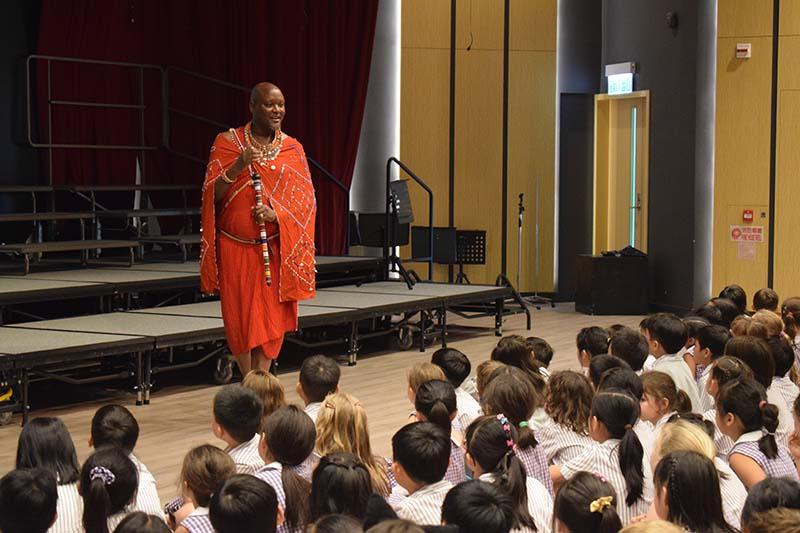
190905 Sambu speaks in Hong Kong about Big Life

A few weeks ago, Big Life Foundation’s Predator Protector Program Coordinator Daniel Ole Sambu visited our partners at The Elephant Society in Hong Kong for a 4th time to raise awareness, this time for lion conservation. The Lion Week included a gala fundraiser dinner, radio interviews, and a special screening of the George Adamson film “Born Free.” But Sambu spent most of his time visiting local schools and sharing stories about successful lion conservation efforts in East Africa, where he manages Big Life programs such as the Predator Compensation Fund.

The Maasai Olympics is another critical predator protection program that Big Life manages, an initiative that is culturally-based and helping to change the long Maasai history of killing lions for social recognition.

Explained Sambu to young listeners in Hong Kong, “If the Maasai are able to change parts of their culture for a good cause, like protecting lions, then maybe it’s also possible for the Chinese to change parts of their culture, and stop using lion bones and rhino horns for medicine.”

The local school children were inexplicably excited about the Maasai Olympics and the incredible warrior skills demonstrated. All of the excitement lead to an unbelievable idea: could we bring the Maasai Olympics to Hong Kong?! Could the Chinese compete against Maasai warriors in the high jump?!

And so, plans are underway to send some of the winners from the 2018 Maasai Olympics to Hong Kong, visas and logistics permitting. If all goes according to plan, we’ll be able to bring this idea into reality in November and of course will keep our supporters updated.

In the meantime, thank you for your support.
 

A LION IS DEAD, NOW WHAT?

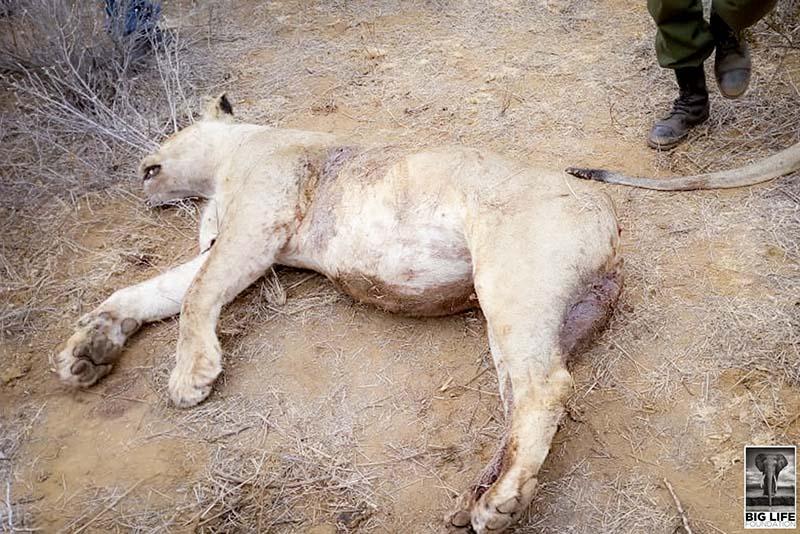
190830 A lion is dead

There is one less lion in Africa.

It’s a familiar story; two cow calves were separated from their herd during a day of grazing in the thick bush. A group of warriors went out to look for them, but the lions got there first. Enraged, the warriors took off after the lion tracks and killed one lioness with spears, as retribution for the loss of their cows.

This happened on Eselengei Group Ranch, where Big Life recently initiated our Predator Compensation Fund (PCF). The agreement was standard for the PCF program, with commitments from both the community and Big Life.

Big Life agrees to manage a program that will pay livestock owners a portion of their verified losses to predators. The community pays 30% of the compensation costs. There are penalties for non-performance, which includes bad livestock husbandry and the retaliatory killing of predators.

We are approaching one-year since the PCF agreement was completed, and this is the first lion that has been killed by a member of the Eselengei community in retaliation for livestock predation since then.

So, now what? It’s always a test. Communities will gladly accept compensation, but enforcing penalties is never as palatable.

The death of the lion sparked a series of meetings between all stakeholders to evaluate what happened and what should be done in response. After much discussion, the final decision adheres to and honors the PCF agreement. The community will pay a fine equivalent to 6 cows, and the community members living in the area where the lion was killed will not receive compensation payments for a two-month period.

Lions have been killed in the past, and will likely be killed again in future. The response following each death has an important impact on the chances of it happening again. In this case, the community will respect the agreement that governs Big Life’s livestock compensation payments. Aside from that lion still being alive today, we could not ask for more.

REJECTED!

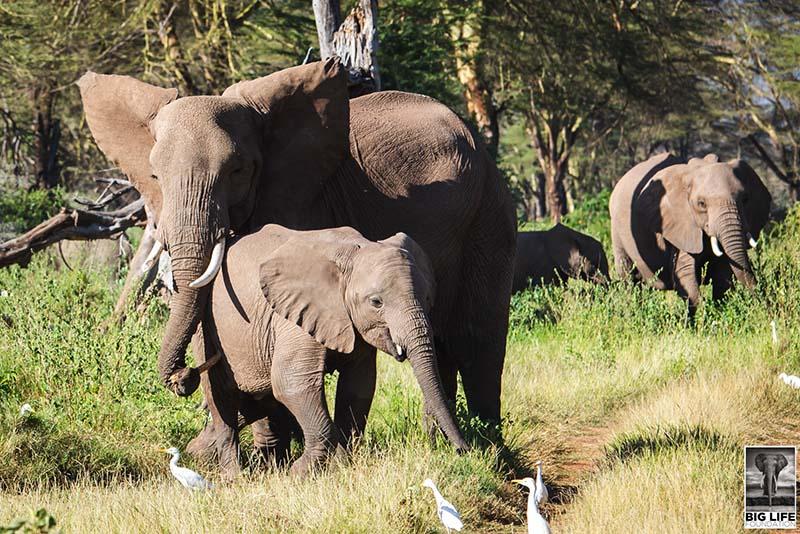
190828 Elephant Mom and calf in East Africa

South Africa, Botswana, and Zimbabwe will NOT be allowed to legally sell their stockpiled ivory on the international market.

The highest level of international trade restrictions applied to the Zambian elephant population will NOT be relaxed.

And African countries will NOT be allowed to continue to wrench baby elephants from their families in the wild and send them into caged confinement in distant countries.

These are just three of the hugely positive outcomes on proposals that were considered this last week by CITES, and we would like to thank everyone who has done their bit in helping to achieve these successes. New agreements have also been reached on increased protections for a number of animals, including giraffes and some shark species, against the threats posed by international trade.

There was apparently intense debate at the conference as southern African countries pushed hard for permission to trade in elephants and elephant products, such as ivory, but thankfully, common sense prevailed.

Some countries continue to argue that due to their healthy elephant populations (for which we applaud them), they have a right to benefit financially from the value of their stockpiled ivory. But we know from experience that the last time that experiment was tried, what followed was one of the worst periods of elephant poaching in history, and it should not be repeated.

Having worked hard to virtually eliminate elephant poaching in the Greater Amboseli ecosystem, we are incredibly happy that the world has decided not to take any steps backwards.

WITH GREAT POWER COMES GREAT RESPONSIBILITY

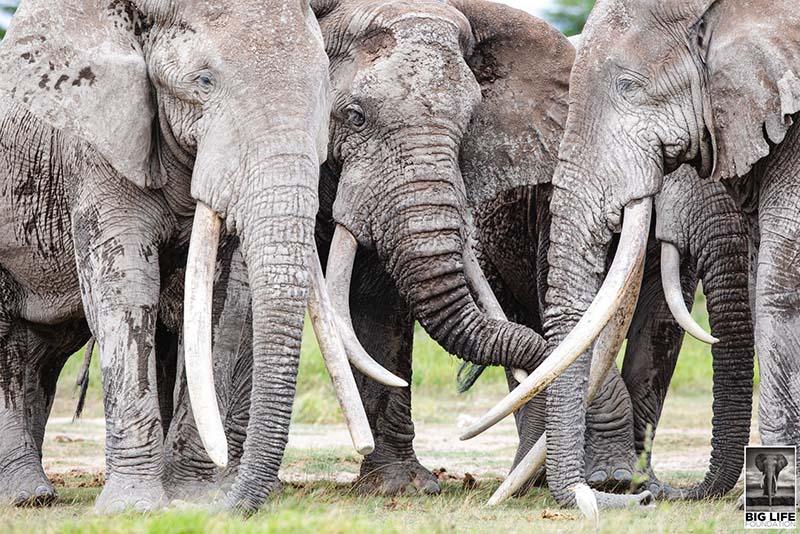
African Elephant Herd stays close to one another

Decisions made in the next ten days will determine the fate of the African Elephant. It sounds dramatic, and it is.

Currently, there is a group of people gathered in Geneva, representatives from countries across the globe, who hold great power. This gathering is the meeting of the Conference of the Parties to the Convention on International Trade in Endangered Species of Wild Fauna and Flora (CITES CoP18), also known as the World Wildlife Conference.

But before we dissect the current conference, let’s wind back the clock, because history matters here. A century ago the African elephant population was estimated to be greater than 10 million, albeit already hugely reduced from the time when Europeans first arrived on the continent. Over the following decades the killing continued, and by 1979 the continental population was further reduced to an estimated 1.3 million.

CITES was established in 1973, becoming the global entity to control and regulate the international trade in elephant ivory that was driving much of the slaughter. For twenty years, from 1977 to 1989, the trade in ivory was allowed but regulated by CITES, yet the killing continued. As a result, in 1989 CITES moved the African elephant onto Appendix 1, affording the species the strictest CITES protection, resulting in the international ivory trade becoming illegal.

As the CITES protection took effect, some elephant populations started to recover. However, certain countries, including South Africa, Botswana, Namibia, and Zimbabwe continued to lobby for permits to sell ivory, arguing that the resulting income is necessary for supporting conservation efforts.

A ‘one-off’ sale of ivory was first allowed in 1999; 34 tons of stockpiled ivory sold by Namibia and Zimbabwe to Japan. Following this ‘success’ southern African countries continued to lobby for further sales, and against very strong advice from conservationists, a second larger sale was permitted in 2008. This involved a sale of approximately 107 tons to Japan AND China. Alarm bells rung worldwide.

What followed was a dramatic surge in poaching, as the ‘legitimized’ ivory trade led to an increase in demand for elephant ivory as well as a cover for poaching and illegal trafficking. An estimated 100,000 elephants were killed between 2010 and 2012 alone.

Since then, the world has come together to stop the poaching of elephants, to great effect. The work on demand-reduction in China, combined with China’s commitments to end the ivory trade, has resulted in an estimated 65% drop in the wholesale price of ivory in Chinese markets from 2014 to 2017. This reduced economic incentive, combined with greater investments in anti-poaching and elephant protection, has controlled poaching to some extent. Indicators tracking poaching rates in Africa suggest that poaching peaked in 2011 and declined until 2017 when it stabilized.

Despite the continued threat represented by poachers, African elephant populations are beginning to recover once again. But, because history tends to repeat itself, there is a group of countries that continue to pursue the permission to sell ivory, despite the evidence of the dramatic negative effects. This week, Botswana, Namibia, South Africa, and Zimbabwe will once again be advocating for changes to the CITES laws, allowing them to trade raw ivory for commercial gain.

Despite the various experiments, it is now obvious that there is no way to effectively regulate the trade in ivory, such that the impact on living elephant populations is minimized. The ivory trade cannot work, and Big Life stands strongly with the Kenyan delegation that is working with other states to effectively propose a complete ban on all forms of ivory trade across the world.

These are enormous decisions that have the potential to shape the future of the African elephant. We hope that CITES acts in support of conservation this week, using its great power and responsibility to help ensure the survival of wildlife worldwide.

  • Big Life x Popsocket Collaboration
  • THREE TINY, HUGE REASONS TO CELEBRATE ON WORLD LION DAY
  • HOW TO FILL A CHURCH ON A WEDNESDAY
  • Be a Wildlife Warrior for World Elephant Day
  • A GIRAFFE IS NOT A GIRAFFE
  • A MOTHER’S WORST NIGHTMARE
  • Director's Note - Q2 2019
  • THE (PREVIOUSLY SHORT) LIFE OF AN AMBOSELI LION
  • SURROUNDED BY SPEARS
  • CONSERVATION’S NEW BATTLEGROUND
  • GIRAFFE ON A MOTORBIKE
  • BORN TO BE BIG
  • A STORY FROM A HAPPIER WORLD
  • LUCKY LIONESS SURVIVES CLOSE SHAVE
  • A BANDIT’S HAVEN NO LONGER
  • Hope in Spite of Bad News
  • A Long-Awaited Journey
  • Director's Note - 2018 Annual Report
  • Poachers Caught Off-Guard in Northern Tanzania
  • Director's Note - Q1 2019
  • ELEPHANTS HAVE FACES
  • BACK TO BOOT CAMP
  • BABY ELEPHANT RESCUED FROM STICKY PREDICAMENT
  • THREADING ELEPHANTS THROUGH THE EYE OF A NEEDLE
  • DIRECTOR'S NOTE - Q4 2018
  • A TALE WITH A LIFESAVING TWIST
  • THE SIGNIFICANCE OF ONE YOUNG WOMAN’S 7 KM WALK
  • QUAGGA GREEN LABEL x BIG LIFE FOUNDATION 2019 PARTNERSHIP
  • A BIG MILESTONE FOR A BIG ELEPHANT - HAPPY BIRTHDAY TIM
  • 4th Maasai Olympics Highly Successful
  • Tough Love Tracker Dogs
  • The Equation That Doesn't Sleep
  • Working with Nature - One Heart Farm
  • Director's Note - Q3 2018
  • The Gold Rush
  • Mobile Care, Lasting Impact
  • One Step Closer to the Finish Line
  • Caught on Camera
  • A Herculean Effort
  • The Real Deal
  • WORLD LION DAY
  • DIRECTOR'S NOTE - Q2 2018
  • AT THE STARTING LINE TO SUPPORT THE FRONT LINE
  • TODAY, WE STAND WITH RANGERS
  • THE VOICE ON THE LIFELINE
  • NDERU – A TRUE ORIGINAL
  • Let the Games Begin!
  • BIG LIFE’S CANINE RANGERS
  • WHO IS THIS MAN?
  • TAKING THE PULSE OF AMBOSELI
  • THE TALLEST LAND ANIMALS
  • COMMITTED TO COMMUNITIES
  • DIRECTOR’S NOTE – Q1 2018
  • BABY STEPS TOWARD RHINO RECOVERY
  • DIRECTOR’S NOTE - 2017 Year in Review
  • HOW TO GROW A LION CUB
  • HONORING THE WOMEN OF BIG LIFE
  • THE LION SLEEPS TONIGHT
  • NEW FILM ON THE FENCE
  • LETTER OF APPRECIATION FROM KENYA WILDLIFE SERVICE
  • AN UPDATE FROM OUR DIRECTOR (Q4 2017)
  • A Memory of Elephants
  • WILD SHIRTS FOR WILDLIFE – ONE WEEK ONLY
  • EXPEDITION UNKNOWN with Josh Gates
  • Kenyan environmental tribunal protects open rangeland
  • From Poacher to Protector: Sergeant Mutinda Ndivo
  • Big Life Wins Rhino Conservation Award
  • STORIES FROM THE FRONTLINES: CORPORAL MEJAI OLE’KUMARI
  • STORIES FROM THE FRONTLINES: CORPORAL OLCHURIE KAPASEI
  • STORIES FROM THE FRONTLINES: CONSTABLE SESEI LOORMONI
  • Elephants in the Crosshairs

Page 100 of 118

  • 95
  • 96
  • 97
  • 98
  • 99
  • 100
  • 101
  • 102
  • 103
  • 104

Amboseli's elephants need your help
Our rangers are on the ground every day — removing snares, resolving human-wildlife conflict, and keeping herds safe. But we can't do it without support.
DONATE

Get Updates
From the field to your inbox: Program news, partnership opportunities, and exclusive event invites — delivered periodically throughout the year. No spam, ever.
SUBSCRIBE

FacebookLinkedInInstagramYouTube
 
FacebookLinkedInInstagramYouTube
 
Charity Navigator Four Star
Best in America
Candid Platinum Transparency 2026
Charity Navigator Four Star
Best in America
Candid Platinum Transparency 2026
Big Life Foundation USA
720 Seneca Street, Suite 107
Seattle, WA 98101
USA
info@biglife.org
+1 971 322 3326
Big Life Foundation Canada
17474 Humber Station Road 
Caledon Ontario L7E 0Z2
Canada
Canada@biglife.org
+1 416 624 6568
Big Life UK
c/o Chapel & York Ltd 
Unit 12 Ladycross Business Park 
Hollow Lane 
Dormansland 
Surrey RH7 6PB
United Kingdom
UK@biglife.org
Sign up for our e-newsletter
Learn more about our programs and partnership opportunities.
GET UPDATES
  •  Privacy Policy  •  Cookie Policy  •  Terms of Service  •  GDPR Compliance  •  Contact
Big Life is registered in the USA as a 501(c)(3) charity (EIN 27-3455389). Donations are tax deductible as permitted by law. BIG LIFE FOUNDATION® is a registered U.S. trademark of Big Life Foundation USA.
Donate