Big Life Foundation

DONATE

Big Life Foundation

GET UPDATES DONATE

Big Life Foundation

GET UPDATES DONATE

  • WHAT WE DO menu down arrow
      • Back
      • PROGRAMS
      • rangers
        WILDLIFE
          PROTECTION
      • PROGRAMS
      • WILDLIFE PROTECTION
      • ANTI-POACHING
      • WILDLIFE CRIME /
            ANTI-TRAFFICKING
      • RHINO PROTECTION
      • TRACKER DOG UNIT
      • Back
      • Lions
        HUMAN-WILDLIFE
          CONFLICT
      • HUMAN-WILDLIFE CONFLICT
      • PREDATOR COMPENSATION
      • MAASAI OLYMPICS
      • HUMAN-ELEPHANT
            CONFLICT MITIGATION
      • Back
      • habitat
        HABITAT
          PROTECTION
      • HABITAT PROTECTION
      • Securing Wildlife Habitat
      • Rangelands Management
      • REDD+ Carbon Project
      • Back
      • Student
        COMMUNITY
         
      • COMMUNITY
      • Education
      • Healthcare
  • HOW WE DO IT menu down arrow
      • Back
      • THE RANGERS
        rangers
      • The Rangers
      • Back
      • PARTNERS
        elephants
        FINANCIALS
        zebras herders
      • Partners
      • Financials
  • WHERE WE WORK menu down arrow
      • Back
      • INTERACTIVE MAP
      • INTERACTIVE MAP
        Area of Operation
  • WHO WE ARE menu down arrow
      • Back
      • Big Life Kenya Big Life Kenya
      • Big Life USA Big Life USA
      • Big Life Canada Big Life Canada
      • Big Life UK Big Life UK
      • Back
      • About Big Life
      • Mission & Vision
      • History
      • Awards & Recognition
      • Back
      • Co-Founders
      • Ambassadors
      • Contact Us
  • PROGRAM UPDATES menu down arrow
      • Back
      • BIG LIFE NEWS
        rangers elephants
      • Big Life News
      • Photos From The Field
      • Short Films Gallery
      • In the Media
      • Operational Reports
      • 2024 Impact Report
      • Radio Room
      • Back
      • 2025 IMPACT REPORT
        Operational Reports
      • Back
      •  PHOTOS FROM THE FIELD
         SHORT FILMS GALLERY
        IN THE MEDIA
        OPERATIONAL REPORTS
        RADIO ROOM
  • SHOP menu down arrow
      • Back
      • BLF Shop
        BIG LIFE
        MERCHANDISE
      • Big Life Merchandise
  • GIVING menu down arrow
      • Back
      • Giving Essentials
        Manage Your Monthly Gift
        Give Monthly
        Start a Fundraiser
        Gift Catalog
      • GIVING menu down arrow Essentials
      • Manage Your Monthly Gift
      • Give Monthly
      • Gift Catalog
      • Start a Fundraiser
      • IRA Charitable Rollover
      • Stock Gifts
      • Leave a Gift In Your Will
      • Other Ways to Give
      • Back
      • IRA Charitable Rollover
        Stock Gifts
        Leave a Gift in Your Will
        OTHER WAYS TO GIVE
  • BIG LIFE MERCHANDISE
  • GET UPDATES
  • DONATE

Unearthing Tim: The Battle to Rescue an Amboseli Icon

181204 1 TIM

Mondays don’t start much worse than this: a report received of a big bull elephant stuck in the mud deep in the Kimana swamp. Our hearts sank. Given the size, there was a small number of elephants it could be, and a small chance of a successful rescue.

An aerial view confirmed the worst: it was Tim, an icon of Amboseli and one of Africa’s largest and most magnificent elephants. He was stuck in a section of deep mud, surrounded by farms and a growing crowd, and clearly in serious trouble.

Big Life rangers responded immediately, but the outlook wasn’t good. Tim was up to his neck in mud and fully immobilized, with zero chance of escaping on his own. Nor was there a way for any kind of vehicle to get close enough in the swamp, either to pull him out or to dig around him. Failure—Tim’s death—was suddenly an even more real possibility.

Regardless, everyone got to work. This was a challenge of physics: how to pull a 6-ton object out of a suction pit, when that object is alive, thrashing, and has no idea the people around him are trying to help. Tim was understandably aggressive and stressed, and tiring fast. Exhaustion alone can kill an animal, and it became a race against the clock to try something, anything, to save him.

The first step was to loosen the mud, so rangers knocked a hole in a concrete agricultural furrow upstream. Water flowed in, and the mud slowly started to release its grip. Tim could move a bit more, and it was helping, but it wasn’t going to solve the problem.

Luckily, additional support was on the way from all over Kenya. A Kenya Wildlife Service (KWS) tractor had been steadily chugging in from Amboseli since the alert was sounded, and our friends at the David Sheldrick Wildlife Trust (DSWT), drawing from their wealth of experience, were also wrapping their heads around the tools needed to pull Tim out. The answer was going to be a very long tow strap, but that is easier said than done. We needed something 300 m long! A team got to work in Nairobi, stitching shorter straps together and then urgently sent the final product down on a private chartered flight. Meanwhile, the KWS vet, along with the DSWT mobile vet unit, were on their way from Tsavo West National Park.

Things were happening, but would the plan work? The tractor got as close as it dared, which was a farm about 100 m away. The team struggled to get the straps onto Tim, somehow persuading him to lift his head and then slipping the straps underneath. Finally, they were ready. The tractor pulled, and the wheels spun… and spun… and spun. The ground was too soft, and it wasn’t going to work. Another approach was needed.

The tractor set off around the swamp to try and approach from the other side. The land there was drier and firmer, but the closest point of approach was now more than 300 m away from Tim. Time ticked by as the tractor slowly drove around, and an hour later, things were in place again. Now there was space to add some extra horsepower, and two Big Life Land Cruisers lined up in front of the tractor to assist. Together, the three machines pulled, the tow strap went tight, Tim shifted slightly, and then… the strap snapped.

It was disappointing, but there was still a ray of hope. Again the vehicles pulled, again there was a slight shift, but again the strap snapped. Eventually, five strap breakages later, Tim had been repositioned and pulled out of the deepest section. Everyone was exhausted by this stage, human and elephant alike. Ten hours in the baking sun had taken its toll, but adrenaline kept the teams going. Victory felt possible; our work would not be in vain.

After more pulling, and even more strap breakages, the tractor and vehicles finally managed to pull Tim 25 m across the muddy ground and onto firmer footing. Once there, he was too worn out from the ordeal to even stand.

The vehicles kept pulling slowly, trying to help him up, knowing that his life depended on it. And finally, in the last light of the day, Tim stood up. Met by cheers from everyone present, he shrugged the tow straps off before slowly heading back toward the Kimana Sanctuary. The rangers stayed with him until 11 pm, ensuring that he was safely back on protected land, before calling the long day over.

Rangers have been keeping an eye on Tim today, and he appears to be fine, but following two prior encounters with farmers’ spears, it is clear that he has not been deterred from living dangerously. We’re not quite sure how many lives Tim has left, but we’ll continue doing our best to make sure that he lives each of them to the fullest!

A huge thanks, as always, to KWS and DSWT, for helping to turn this incident from a potential tragedy into a remarkable success story.

And to our supporters around the world, thank you! If not for your ongoing generosity, stories like these might not have such a happy ending. As we enter the season of giving, please consider supporting Big Life Foundation and our critical work to protect and secure the Kimana Sanctuary. This valuable area of habitat gives Tim, his fellow elephants, and other wildlife a safe place to call home.

{gallery}program-updates/big-life-news/Unearthing-Tim{/gallery}

SPACE (To Call Their Own)

181130 1 Lions

More and more, Big Life’s story—and the story of the animals whose lives we strive to protect—comes down to the one same simple thing:

Space.

It is something you will hear about from us over and over again. Even more than about poachers and ivory.

Space. A safe haven for wild animals.

Somewhere they can live out their lives away from the most dangerous predator of all—humans.

For those of you who know the Greater Amboseli ecosystem, you are aware of just how tiny Amboseli National Park is. It’s only 100,000 acres. That’s about the size of Philadelphia. For animals who are constantly on the move in search of food and water, that’s too small—they need far more range than that to roam. In fact, it’s been calculated that approximately 80% of animals who call Amboseli home leave the protection of the park at certain times of the year.

Decades ago, this wasn’t a problem. There was enough food, enough unspoiled wild habitat around the park, for the animals to venture as far as they needed in complete safety.

However, those days are gone. Probably forever. As humans expand relentlessly into what was once wildlife habitat, they come into ever-more-frequent conflict with wildlife.

There are no winners of this conflict. Everyone loses.

Across the ecosystem, the mounting pressure is keenly felt: competition for grazing between wildlife and the ever-growing numbers of livestock, conversion of former wildlife habitat to farmland, and the inexorable spread of humans, part of the population explosion happening across Africa this century.

It sounds bad, but we wouldn’t be here if we didn’t believe that there was a future in which wildlife and humans can share the space. It’s about protecting the right areas. Fortunately, there is one such place to the north of the park with the potential to be a long-term safe zone for wildlife.

Its name is Eselengei.

181130 2 Eselengei

Encompassing over 200,000 acres, Eselengei is the northernmost tract of intact wilderness in the Greater Amboseli ecosystem. A last wild frontier. And with every year, its importance and the need to conserve it is growing.

Over the years, Big Life’s rangers have played a central role in controlling poaching and making the ecosystem a safer place. As a result, animals—especially elephants—are now venturing further from the park and deeper into Eselengei. They are also staying there for longer. This safe zone is not just important for elephants; Eselengei is also a stronghold of the ecosystem’s lion population, as well as home to a wide diversity of other species.

181130 3 Eselengei Map

However, as one might expect, there is peril in paradise.

Eselengei is surrounded by communities that are not always friendly to wildlife. Poachers, targeting bushmeat and sometimes ivory, operate along its northern boundaries, frequently picking off animals in the areas outside of the existing conservancy that lies within Eselengei. Earlier this year, five elephants were speared to death in a series of horrific events.

But it is not too late.

Now is the time for expanded protection of Eselengei. Now is the time to make this entire area safe for animals, today and into the future, and work with partners to provide the local community with real long-term economic benefits from conservation.

What we do here, or fail to do, will determine how the ecosystem functions for years to come.

We have already taken our first steps. Earlier this year, we established a fully functioning mobile ranger unit in Eselengei with funding from USAID.

181130 4 Rangers

We now plan to add two permanent ranger outposts, fully equipped and manned by recruits from the Eselengei community, and supported by a Land Cruiser vehicle that will allow for rapid response to emergencies. These rangers will not just work to protect wildlife on Eselengei (often by providing support to the people who share this space), but will also respond when animals cross the invisible barrier into neighbouring ‘hostile’ territory.

Also, after previously supporting a scaled-down version of our Predator Compensation Fund on Eselengei, we plan to introduce the full version soon. The fund provides livestock owners with financial compensation for all verified losses of their animals to the ecosystem’s wild predators. This program has been immensely successful over the years, helping to increase the lion population throughout the ecosystem. Pragmatically speaking, it’s one of the highest impact investments when it comes to gaining community support for conservation.

But to be truly successful, we need to introduce all of the other elements that make up Big Life’s holistic approach—everything from educational scholarships for local children to fortification of community water sources and provision of a sufficient supply of fuel to pump enough water for both livestock and wildlife.

Eselengei is—for now—an incredibly important area for wildlife, but if not nurtured and protected, with the speed of change and development elsewhere, its future as a wilderness will be rapidly compromised. And as is unfortunately the way with ‘progress’, it is always an uphill battle, to put it mildly, to reverse the damage. We would prefer to fight the battle now, while the playing field is level, because for the animals who call this area home, there are no second chances.

It is our hope that you will see the urgency of today’s call for action and offer your support now, while there is still time. The fate of the ecosystem’s wildlife—whose lives depend on the lands of Eselengei—hangs in the balance.

Please help us to secure a safe haven for wildlife—a place for animals to live safe from human predation—while also supporting the local communities on Eselengei who will ultimately decide on the future of their land.

Your generous support will help to fund the following and more:

Construction of two fully-equipped permanent ranger outposts

 $50,000

 Annual costs for rangers at two new outposts (includes salaries, rations, uniforms, all  equipment)

 $60,000

 Purchase and customization of Land Cruiser ranger patrol vehicle

 $70,000

 Annual running costs of ranger patrol vehicles (includes fuel, maintenance, repairs)

 $20,000

 Annual aircraft running costs (5 hours per month)

 $18,000

 Water for wildlife (fortification of reservoirs, pumps, drinking troughs,
 and fuel for water pumps)

 $5,000

 Annual costs of Predator Compensation Fund (running costs and livestock compensation)

 $60,000

 Education Scholarships for local Maasai children (5 years of funding for 4 primary school and 4 high school students)

 $20,000

 Grand Total

 $303,000

Thank you as ever for your loyal support.  Nick Brandt & Richard Bonham


New! Big Life Branded Merchandise

181126 Merchandise

You asked, and we listened. We’re excited to announce that you can now show your support of our shared mission to protect wildlife and wild lands in East Africa with Big Life branded gear!

If you’re shopping today for Cyber Monday, these items also make great gifts to share with loved ones this holiday season.

Sustainable, eco-friendly holiday gift options include: water bottles, totes, t-shirts, hoodies, ball caps, beanies, coffee mugs, stickers, and more.

Please visit: shop.biglife.org

A Celebration of Culture and Sport

181101 Jeremy Goss MG 9952

4th Biennial Maasai Olympics Final Scheduled December 15, 2018

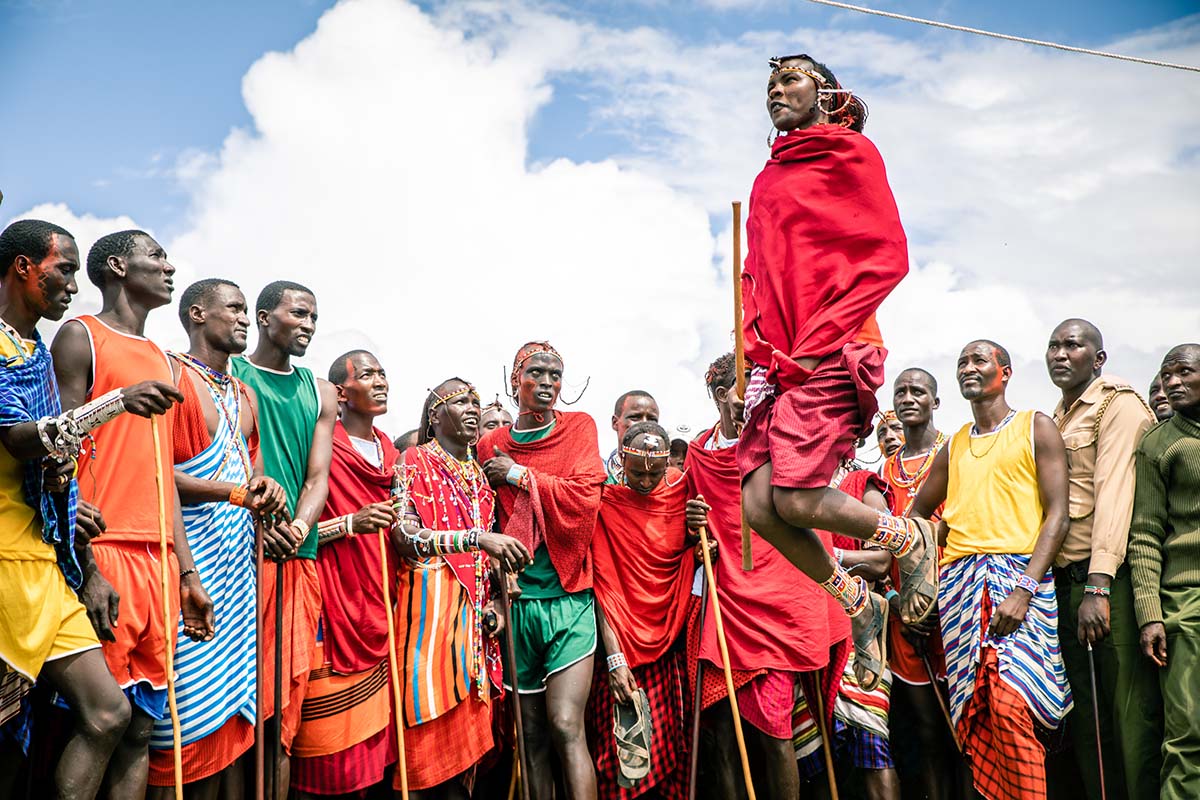
Amboseli, Kenya -- African lion populations have declined by at least 43% in the last 20 years, with few signs of abating. Today, there are as few as 20,000 in the wild. In Maasai culture, it is custom for warriors to kill lions as a traditional rite of passage into manhood. But at the behest of the cultural “fathers,” or elders, in the Amboseli ecosystem, Big Life Foundation established the Maasai Olympics in 2012. A culture-shifting alternative was created: conservation education paired with organized sports competitions based on traditional warrior skills. Today, warriors compete for medals and prizes instead of killing lions.

Every two years, participating warrior villages select teams and compete in a series of regional one-on-one tournaments leading up to the final, action-packed event with athletic performances, spirited but sporting rivalry, and no dead lions. Athletes compete for recognition, express bravery, attract girlfriends, and identify leaders in six events: 200m, 800m, and 5,000m races, javelin for distance, rungu (wooden club) for accuracy, and the high jump, Maasai warrior-style from a standing position. As young women are often the motivators behind warriors wanting to hunt lions, and they are also potential conservation advocates, their inclusion is critical. Young women compete in two events: the 100m and 1,500m races.

The conservation impact has been measurable. 84% of surveyed Maasai warriors who participated in the 2016 Olympics said that the Maasai Olympics was a good or very good alternative to traditional lion hunting.

Following numerous conservation education meetings throughout the ecosystem, regional competitions for the 4th Maasai Olympics competition began this past August and for three months, warriors tested each other, looking to see who would come out on top. The Final, where all four teams will come together to battle it out, has been scheduled for December 15, and the warriors are buzzing with anticipation. Event winners receive individual medals, prizes, and public recognition for their skills, but the winning team also takes home a trophy and prize breeding bull.

The Final will be overseen by the patron for the Maasai Olympics, gold medal Olympian, 800m world-record holder, and fellow Maasai, David Rudisha.

A very special thank you to our 2018 Maasai Olympics sponsors, including: National Geographic Society, Charles and Judy Tate, Dan and Pam Baty, Chester Zoo, Born Free Foundation, Zoo Basel, Disney Conservation Fund, Great Plains Conservation, Great Plains Foundation, Marleen Groen, and Safari Professionals of the Americas. The success of the Maasai Olympics is only possible because of your partnership.

Additional thanks and acknowledgment to Dereck and Beverly Joubert for their award-winning documentary film “Tribe vs. Pride” which features the Maasai Olympics. Thank you for helping spread awareness about the Maasai Olympics and its conservation impact.

For more information, photos, accommodation options, and driving directions, visit: maasaiolympics.com

Interested in attending and covering the Maasai Olympics?

Please rsvp to This email address is being protected from spambots. You need JavaScript enabled to view it. to register for a press pass, or to request photos of the Finals.


  • Yet Another Ivory Bust: What is CITES Thinking?
  • Surveillance Pays Off
  • When Giants Clash
  • Handover of Conservation Initiatives to OOGR
  • When 'In Vogue' Means 'In Trouble'
  • MONTHLY GIVING GIVES BACK – ENTER TO WIN
  • THE YEAR A MAN FIRST STEPPED ON THE MOON
  • ONE TON OF WORK: Big Life's 2017 Annual Report
  • BIG LIFE LAUNCHES AMBOSELI CONSERVATION ACADEMY
  • BIG LIFE PROTECTS WILD RHINOS: A MODERN DAY UNICORN
  • UK SETS BOLD NEW STANDARD IN IVORY TRADE BAN
  • ULYSSES FALLS AGAIN
  • ONE STEP FORWARD, TWO STEPS BACK
  • IN FOND MEMORY OF KIOR, UNSUNG CONSERVATION HERO
  • BIG NEWS: HONG KONG BANS IVORY IN LANDSLIDE VOTE
  • OUR NEW YEAR’S RESOLUTION: BIG LIFE TO PROTECT KIMANA SANCTUARY
  • A TALE OF TWO COUNTRIES
  • LOST AND FOUND: ONE BABY ELEPHANT
  • The Rains Return
  • LIVE ELEPHANTS TRUMP TROPHIES
  • A Healthy Future
  • THE (DEADLY) WANTED LIST
  • WE DIDN’T START THE FIRE
  • Class is Dismissed
  • THE MOMENT THE IVORY TRADE HAS BEEN WAITING FOR
  • A WANDERIN’ MAN
  • LOCAL UPDATE ON THE FIGHT AGAINST COVID-19
  • DIRECTOR’S NOTE – Q2 2020
  • MEET POPOTE: BIG LIFE OPERATIONAL COMMANDER
  • MEET TARAYIA: BIG LIFE SERGEANT
  • MEET JOHNSON: BIG LIFE CONSTABLE
  • MEET VERONICA: BIG LIFE CONSTABLE
  • MEET EZEKIEL: BIG LIFE DRIVER
  • MEET AMOS: CONSTABLE, MONITORING AND EVALUATION RANGER
  • BUCKING THE TREND
  • RANGERS SAVE A TINY LIFE
  • GIRAFFE POACHERS STRIKE AGAIN – AND SO DOES BIG LIFE
  • THE SNARE THAT (NEARLY) BROKE THE CAMEL’S BACK
  • A BIG BABY WITH A BIG PROBLEM
  • Director's Note - Q1 2020
  • THE IVORY SCAVENGER
  • WHEN LION MET OWL
  • THE POACHERS WHO SHOULD HAVE STAYED AT HOME
  • FROM KILI TO THE HIMALAYAS
  • TOMORROW’S CONSERVATION GAMECHANGERS
  • ONE BABY ELEPHANT LOST AND FOUND
  • OF HANDBAGS AND HOPE FOR THE FUTURE
  • SMALL BUT MIGHTY
  • THE SHUKA STANDS OUT
  • 8 LUCKY RHINOS
  • Saved By The Books
  • THE PATH FORWARD
  • PART TIME RANGERS X BIG LIFE FOUNDATION PARTNERSHIP
  • LION PRIDE IN HONG KONG
  • A LION IS DEAD, NOW WHAT?
  • REJECTED!
  • WITH GREAT POWER COMES GREAT RESPONSIBILITY
  • Big Life x Popsocket Collaboration
  • THREE TINY, HUGE REASONS TO CELEBRATE ON WORLD LION DAY
  • HOW TO FILL A CHURCH ON A WEDNESDAY
  • Be a Wildlife Warrior for World Elephant Day
  • A GIRAFFE IS NOT A GIRAFFE
  • A MOTHER’S WORST NIGHTMARE
  • Director's Note - Q2 2019
  • THE (PREVIOUSLY SHORT) LIFE OF AN AMBOSELI LION
  • SURROUNDED BY SPEARS
  • CONSERVATION’S NEW BATTLEGROUND
  • GIRAFFE ON A MOTORBIKE
  • BORN TO BE BIG
  • A STORY FROM A HAPPIER WORLD
  • LUCKY LIONESS SURVIVES CLOSE SHAVE
  • A BANDIT’S HAVEN NO LONGER
  • Hope in Spite of Bad News
  • A Long-Awaited Journey
  • Director's Note - 2018 Annual Report
  • Poachers Caught Off-Guard in Northern Tanzania
  • Director's Note - Q1 2019
  • ELEPHANTS HAVE FACES
  • BACK TO BOOT CAMP
  • BABY ELEPHANT RESCUED FROM STICKY PREDICAMENT
  • THREADING ELEPHANTS THROUGH THE EYE OF A NEEDLE
  • DIRECTOR'S NOTE - Q4 2018
  • A TALE WITH A LIFESAVING TWIST
  • THE SIGNIFICANCE OF ONE YOUNG WOMAN’S 7 KM WALK
  • QUAGGA GREEN LABEL x BIG LIFE FOUNDATION 2019 PARTNERSHIP
  • A BIG MILESTONE FOR A BIG ELEPHANT - HAPPY BIRTHDAY TIM
  • 4th Maasai Olympics Highly Successful
  • Tough Love Tracker Dogs
  • The Equation That Doesn't Sleep
  • Working with Nature - One Heart Farm
  • Director's Note - Q3 2018
  • The Gold Rush
  • Mobile Care, Lasting Impact
  • One Step Closer to the Finish Line
  • Caught on Camera
  • A Herculean Effort
  • The Real Deal
  • WORLD LION DAY
  • DIRECTOR'S NOTE - Q2 2018
  • AT THE STARTING LINE TO SUPPORT THE FRONT LINE
  • TODAY, WE STAND WITH RANGERS
  • THE VOICE ON THE LIFELINE
  • NDERU – A TRUE ORIGINAL
  • Let the Games Begin!
  • BIG LIFE’S CANINE RANGERS
  • WHO IS THIS MAN?
  • TAKING THE PULSE OF AMBOSELI
  • THE TALLEST LAND ANIMALS
  • COMMITTED TO COMMUNITIES
  • DIRECTOR’S NOTE – Q1 2018
  • BABY STEPS TOWARD RHINO RECOVERY
  • DIRECTOR’S NOTE - 2017 Year in Review
  • HOW TO GROW A LION CUB
  • HONORING THE WOMEN OF BIG LIFE
  • THE LION SLEEPS TONIGHT
  • NEW FILM ON THE FENCE
  • LETTER OF APPRECIATION FROM KENYA WILDLIFE SERVICE
  • AN UPDATE FROM OUR DIRECTOR (Q4 2017)
  • A Memory of Elephants
  • WILD SHIRTS FOR WILDLIFE – ONE WEEK ONLY
  • EXPEDITION UNKNOWN with Josh Gates
  • Kenyan environmental tribunal protects open rangeland
  • From Poacher to Protector: Sergeant Mutinda Ndivo
  • Big Life Wins Rhino Conservation Award
  • STORIES FROM THE FRONTLINES: CORPORAL MEJAI OLE’KUMARI
  • STORIES FROM THE FRONTLINES: CORPORAL OLCHURIE KAPASEI
  • STORIES FROM THE FRONTLINES: CONSTABLE SESEI LOORMONI
  • Elephants in the Crosshairs

Page 83 of 115

  • 78
  • 79
  • 80
  • 81
  • 82
  • 83
  • 84
  • 85
  • 86
  • 87

Amboseli's elephants need your help
Our rangers are on the ground every day — removing snares, resolving human-wildlife conflict, and keeping herds safe. But we can't do it without support.
DONATE

Get Updates
From the field to your inbox: Program news, partnership opportunities, and exclusive event invites — delivered periodically throughout the year. No spam, ever.
SUBSCRIBE

FacebookLinkedInInstagramYouTube
 
FacebookLinkedInInstagramYouTube
 
Charity Navigator Four Star
Best in America
Candid Platinum Transparency 2026
Charity Navigator Four Star
Best in America
Candid Platinum Transparency 2026
Big Life Foundation USA
1715 North Heron Drive
Ridgefield, WA 98642
USA
info@biglife.org
+1 971 322 3326
Big Life Foundation Canada
17474 Humber Station Road 
Caledon Ontario L7E 0Z2
Canada
Canada@biglife.org
+1 416 624 6568
Big Life UK
c/o Chapel & York Ltd 
Unit 12 Ladycross Business Park 
Hollow Lane 
Dormansland 
Surrey RH7 6PB
United Kingdom
UK@biglife.org
Sign up for our e-newsletter
Learn more about our programs and partnership opportunities.
GET UPDATES
  •  Privacy Policy  •  Cookie Policy  •  Terms of Service  •  GDPR Compliance  •  Contact
Big Life is registered in the USA as a 501(c)(3) charity (EIN 27-3455389). Donations are tax deductible as permitted by law. BIG LIFE FOUNDATION® is a registered U.S. trademark of Big Life Foundation USA.
Donate