Big Life Foundation

DONATE

Big Life Foundation

GET UPDATES DONATE

Big Life Foundation

GET UPDATES DONATE

  • WHAT WE DO menu down arrow
      • Back
      • PROGRAMS
      • rangers
        WILDLIFE
          PROTECTION
      • PROGRAMS
      • WILDLIFE PROTECTION
      • ANTI-POACHING
      • WILDLIFE CRIME /
            ANTI-TRAFFICKING
      • RHINO PROTECTION
      • TRACKER DOG UNIT
      • Back
      • Lions
        HUMAN-WILDLIFE
          CONFLICT
      • HUMAN-WILDLIFE CONFLICT
      • PREDATOR COMPENSATION
      • MAASAI OLYMPICS
      • HUMAN-ELEPHANT
            CONFLICT MITIGATION
      • Back
      • habitat
        HABITAT
          PROTECTION
      • HABITAT PROTECTION
      • Securing Wildlife Habitat
      • Rangelands Management
      • REDD+ Carbon Project
      • Back
      • Student
        COMMUNITY
         
      • COMMUNITY
      • Education
      • Healthcare
  • HOW WE DO IT menu down arrow
      • Back
      • THE RANGERS
        rangers
      • The Rangers
      • Back
      • PARTNERS
        elephants
        FINANCIALS
        zebras herders
      • Partners
      • Financials
  • WHERE WE WORK menu down arrow
      • Back
      • INTERACTIVE MAP
      • INTERACTIVE MAP
        Area of Operation
  • WHO WE ARE menu down arrow
      • Back
      • Big Life Kenya Big Life Kenya
      • Big Life USA
      • Big Life Canada Big Life Canada
      • Big Life UK Big Life UK
      • Back
      • About Big Life
      • Mission & Vision
      • History
      • Awards & Recognition
      • Back
      • Co-Founders
      • Ambassadors
      • Contact Us
  • PROGRAM UPDATES menu down arrow
      • Back
      • BIG LIFE NEWS
        rangers elephants
      • Big Life News
      • Photos From The Field
      • Short Films Gallery
      • In the Media
      • Operational Reports
      • 2025 Impact Report
      • Radio Room
      • Back
      • 2025 IMPACT REPORT
        Operational Reports
      • Back
      •  PHOTOS FROM THE FIELD
         SHORT FILMS GALLERY
        IN THE MEDIA
        OPERATIONAL REPORTS
        RADIO ROOM
  • SHOP menu down arrow
      • Back
      • BLF Shop
        BIG LIFE
        MERCHANDISE
      • Big Life Merchandise
  • GIVING menu down arrow
      • Back
      • Giving Essentials
        Manage Your Monthly Gift
        Give Monthly
        Start a Fundraiser
        Gift Catalog
      • GIVING menu down arrow Essentials
      • Manage Your Monthly Gift
      • Give Monthly
      • Gift Catalog
      • Start a Fundraiser
      • IRA Charitable Rollover
      • Stock Gifts
      • Leave a Gift In Your Will
      • Other Ways to Give
      • Back
      • IRA Charitable Rollover
        Stock Gifts
        Leave a Gift in Your Will
        OTHER WAYS TO GIVE
  • BIG LIFE MERCHANDISE
  • GET UPDATES
  • DONATE

DIRECTOR’S NOTE – Q1 2018

180525 elephant JG

We track a lot of numbers, but there are two that shape our world more than any other. One is the amount of money that we raise and put into our community conservation projects. The second is the amount of rainfall that hits the ground here in the greater Amboseli ecosystem.

Rainfall is a fundamental driver of the health of local communities, both human and animal, and this season has been an absolute bumper. Last year was brutal; the combination of an extended period of erratic rainfall and grazing mismanagement had tipped the ecosystem over the edge. Carcasses of both wildlife and livestock were a common sight. But in a very welcome turnaround, we’ve already received more rainfall in these first three months than we sometimes do in an entire year. The transformation of the landscape has been spectacular; the dust turned to a sea of grass humming with life.

The widespread availability of water and forage has allowed elephants to further explore the limits of their ranges, sometimes with disastrous consequences. Amboseli is a big ecosystem, but there is an edge, and a sharp fall-off in human tolerance for wildlife beyond this edge. We had a horrible reminder of this in January, when crop-raiding by elephants on and around Eselengei Group Ranch (a communally-owned piece of land in the north of the ecosystem, outside our core area of operation) led to violent retaliation by angry farmers. Five elephants were speared to death, and numerous others wounded. I worry that this is only a taste of things to come, and it emphasizes the need to continue to find ways to balance the needs of both humans and animals.

It is thus timely that Big Life is expanding our work in this same area, having created a mobile unit of rangers to patrol Eselengei in an exciting project funded by USAID. We are also working with the community to expand the Predator Compensation Fund onto Eselengei, in an attempt to ease the economic burden caused by high levels of livestock predation.

At the end of the day, most human behavior is driven by these economic realities, and the trade in illegal wildlife products is no different. These products are all worth a lot to the people who deal in them, and catching them is no easy task. Big Life continues to invest heavily, and with great success, in disrupting these supply chains. Following the cumulative total of more than 1 ton of ivory confiscated in 2017 (working in collaboration with Kenya Wildlife Service), Big Life has arrested 28 people this quarter with everything from ivory to lion teeth to a worrying increase in pangolin (live and scales).

As usual, there is a lot going on here at Big Life, but there is always time to say a big thanks to our partners and supporters. We couldn’t do this without you.

Richard Bonham
Co-Founder and Director of Operations

READ OUR FULL QUARTERLY REPORT 
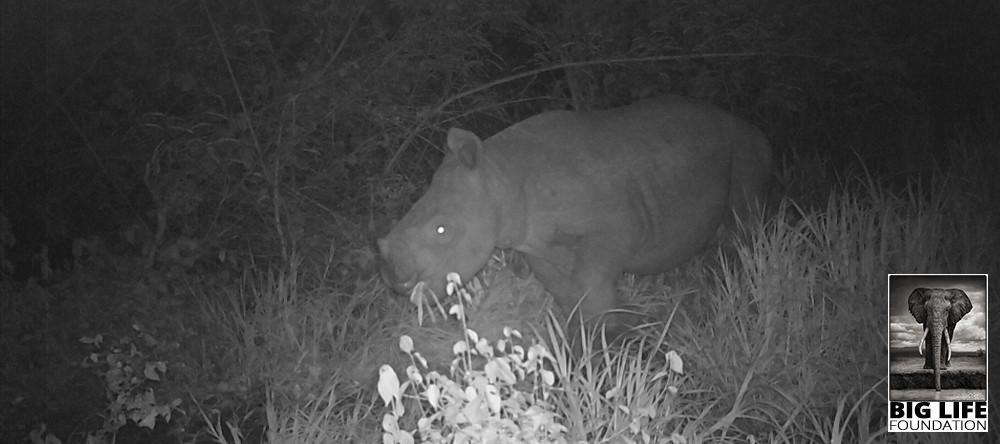
 

BABY STEPS TOWARD RHINO RECOVERY

180518 New Baby Rhino

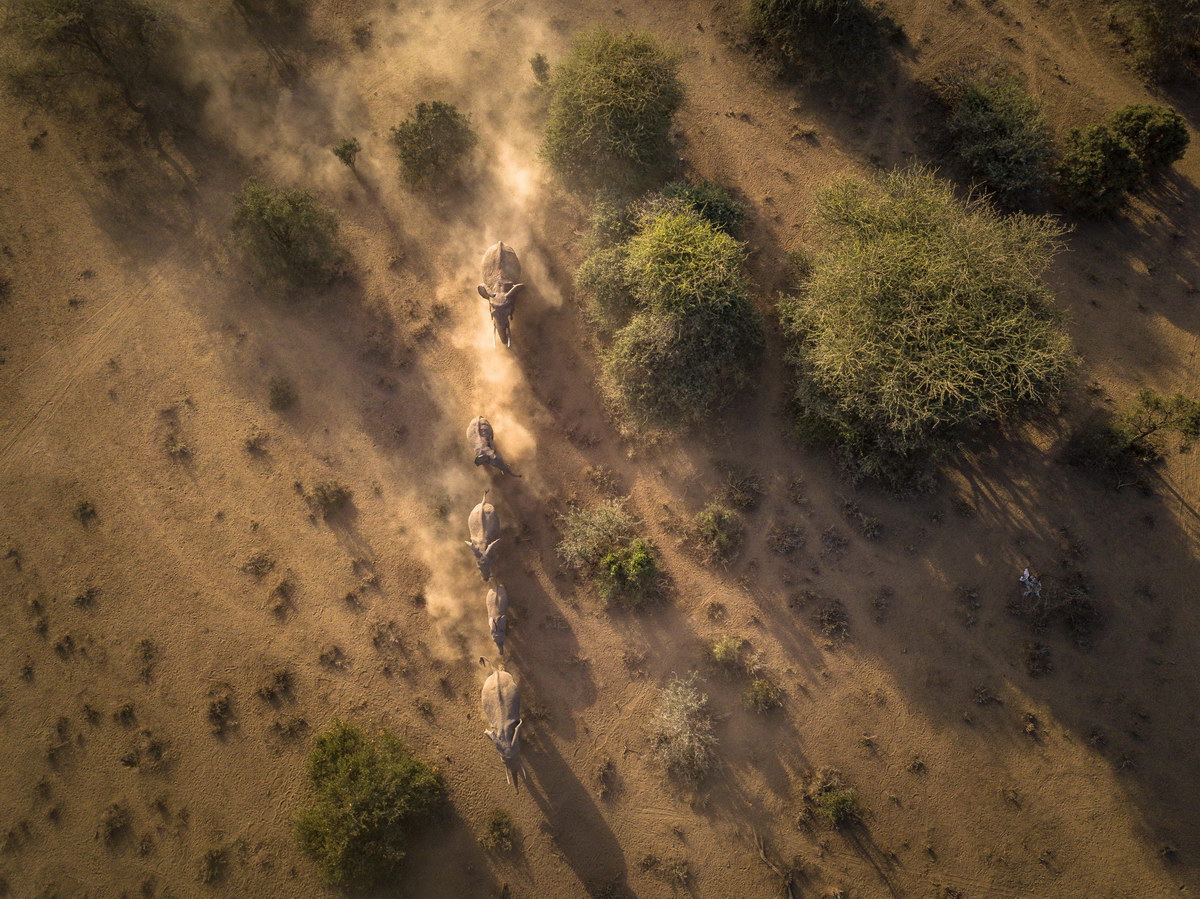
Months ago, when we first saw the four-inch tracks in the rhino territory, we held our breath. A camera trap later confirmed the incredible news: a baby rhino had been born! It was hard to stay quiet, but we decided to keep our lips sealed, to give this little rhino the fighting chance it deserves.

Eastern black rhinos are critically endangered; their numbers have plummeted by 90% in the last three generations. Their keratin horns bring top dollar in eastern markets, and so they continue to be targeted by poachers. There are fewer than 600 Eastern black rhinos in Kenya today.

In partnership with Kenya Wildlife Service, Big Life has 51 rangers stationed in 5 outposts, dedicated to protecting the small population of rhinos in our area of operation. In 2017, there were only 23 direct sightings of these elusive animals during foot patrols. They are otherwise carefully monitored remotely via camera traps, safely nestled in the dense and wild volcanic terrain that is the Chyulu Hills.

You can’t keep a secret forever, and word is slowly spreading. So, for this Endangered Species Day, we’re happy to announce that our rhino population has officially grown from 7 to 8.

We all have a role to play to save these special animals. Please consider making a donation in honor of Endangered Species Day, and help our rangers keep this baby rhino and his family safe from harm.

DIRECTOR’S NOTE - 2017 Year in Review

Directors note, image by Clifford Pickett

I’ve seen a world without elephants. It’s how I found the Chyulu Hills when I arrived 30 years ago. It was a time following the last poaching crisis of the 1970s and 80s, when we didn’t see so much as a single elephant track. But nature is impatient, and things can change quickly.

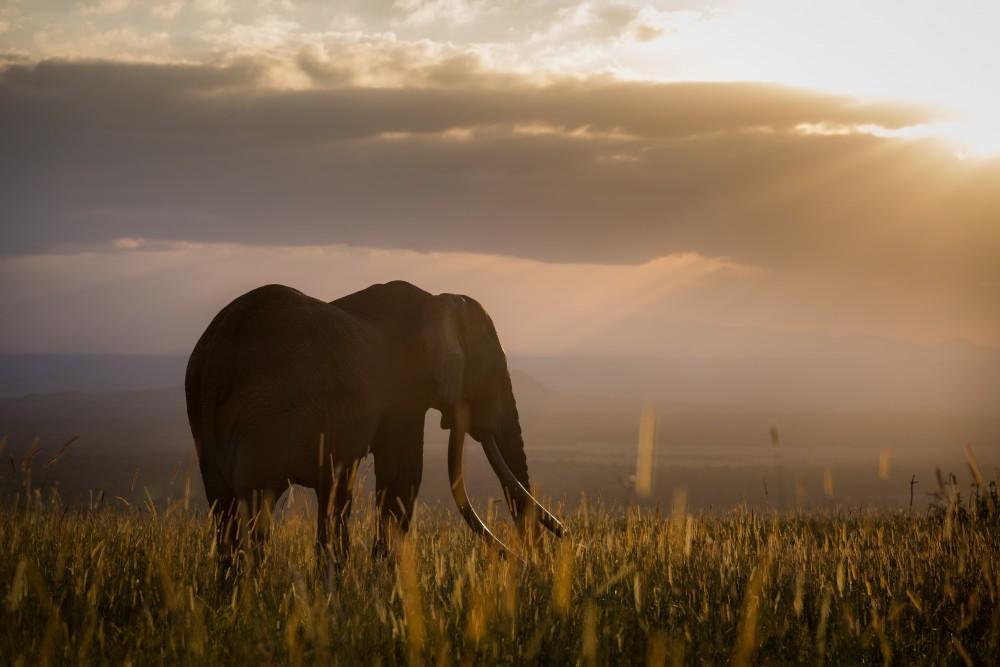
The Amboseli elephant population has since rebounded, and giants have filled the space, including some who carry the largest tusks on the continent. One of my favourites has a name—One Ton—so called because of the size of his ivory. Beautiful to look at, but a curse to carry. Big Life rangers have managed to keep him alive through the worst of the recent times, and with only one confirmed elephant poaching in our area of operation in 2017, I feel as though we’re giving him the best anti-poaching protection that we can.

Despite the tremendous success that we’ve had against poachers in the greater Amboseli ecosystem, Big Life rangers can only cover so much ground. Elephants are still dying elsewhere, so we’ve been targeting the supply of ivory further up the chain.

Incidentally, ‘One Ton’ of ivory (over 2,000 pounds) is how much Big Life’s intelligence unit confiscated this year, working closely with Kenya Wildlife Service. Our network of informants has greatly expanded our reach and influence, and in addition to making life difficult for elephant poachers, we’re also working to make it difficult for ivory traffickers.

Another piece of exciting news, and a huge step in the fight to reduce demand for ivory, is that of China’s move this year to finally close its ivory markets, followed soon after by Hong Kong. Things won’t change overnight, and we can expect ongoing circulation on the black market, but the importance of these commitments and the statement they make cannot be overstated.

However, it’s no longer the thought of poachers that keeps me awake at night. These days, I know that I will wake to reports of overnight raids of farmers’ crops by elephants, and occasionally of a retaliatory spear that has found its mark. This is now the biggest threat to One Ton and his kind, and without a viable solution for coexistence between animals and people, all our efforts are worth nothing.

The good news is that our actions are making a difference. The completion in 2017 of Phase 1 (53 km) of crop-protection fencing has hugely reduced incidents of crop-raiding, thus reducing human-elephant conflict. This success has spurred us to move ahead with the next 60 km of fencing, and thanks to the generosity of our supporters, Phase 2 will be completed in 2018.

But there is more to this ecosystem, and to Big Life, than elephants. In collaboration with local partners, we have achieved what must be one of the most remarkable lion recoveries on community land anywhere in Africa. Ironically, this success means we are running out of space for lions, testing the limits of pastoralist tolerance of these costly animals.

The immediate solution is to expand the protective coverage provided by Big Life’s Predator Compensation Fund, which we began to do this year. If we are able to secure the necessary funding, then we plan to continue these efforts in 2018, incentivizing greater tolerance of livestock predation.

The issue of space is a good note on which to end, because it will be increasingly important as the ecosystem continues to develop. There are some critical areas that must be protected, discussed within this report.

As usual, there is not a dull moment here in Kenya. What we are doing is vitally important, and time is of the essence. Thanks to all of you who make it possible, both through financial support and through action on the ground. This truly is a cumulative effort, and one we shall continue.

Richard Bonham
Co-Founder & Director of Operations

Read Big Life's full 2017 Annual Report HERE. 

HOW TO GROW A LION CUB

Lion Cub

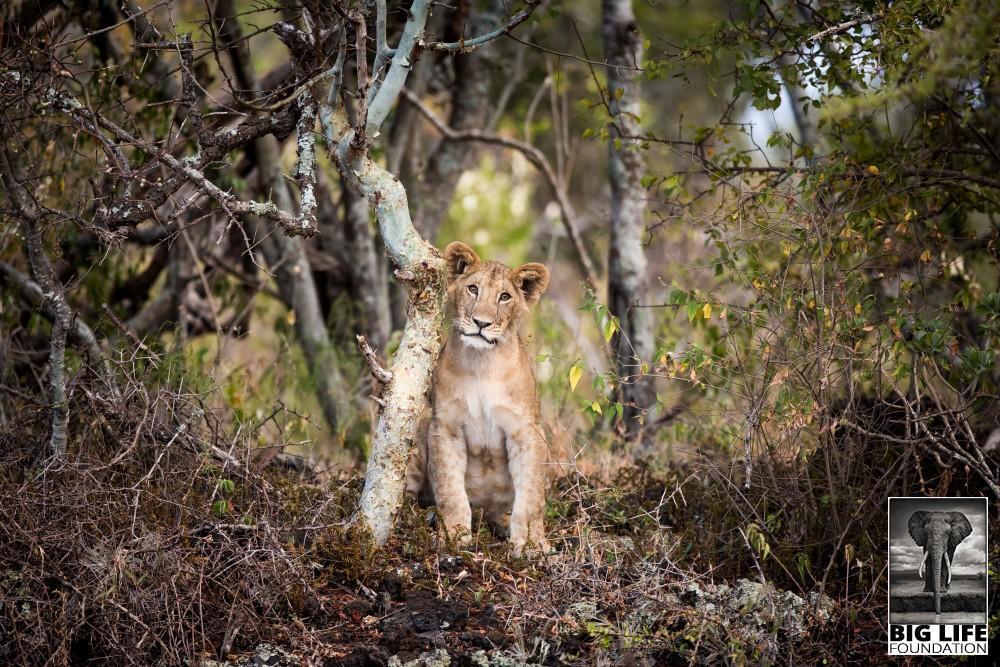
It’s not an easy life for a lion cub in Africa. If humans don’t get you, sometimes your own kind will.

Big Life has been tracking a collared lioness, Mashael, and her sister, Noosinoni, for the last year, with much excitement after they gave birth to seven cubs between them. It was all going well until recently, when our local conservation partners Lion Guardians witnessed a terrible event.

Two new young males had arrived in Mashael’s territory, looking for space of their own. In such cases, the incoming lions will usually kill existing cubs so that they might have their own sooner. The mothers courageously defended their cubs, clashing with the invaders and managing to chase them off, but with blood drawn on both sides. At that point, only four cubs could be seen; the other three were presumed missing or already dead.

The following day, when the cubs’ fathers returned, the three missing cubs were still nowhere to be found. The lionesses were seen again a week later, but there was no sign of any of the cubs. At this point, we thought that the remaining four may also have been killed.

Prepared for the worst, we tracked Mashael’s collar to see at least how the two females were recovering from their injuries. They were lying in the grass and seemed fine, the wounds having healed well. But then, another body moved in the grass. Then another. We started to count, and couldn’t believe it. All seven cubs, still alive and well, reunited with their mothers!

While invading males pose a challenge, humans remain the greatest threat to this family and their kind. Big Life’s Predator Compensation Fund (PCF) provides them with relative safety from retaliatory killing, but when lions leave protected areas, the result is often death.

We are actively expanding the PCF onto Eselengei Group Ranch in the northern reaches of our area of operation, and will be joining the Lion Guardians in their efforts there. We are also working with partners to expand predator protection along the border of Kenya and Tanzania, in the Enduimet Wildlife Management Area.

Big Life’s ultimate goal is to expand the PCF across our entire area of operation, as funds permit, because as these cubs grow, so too must our protection of their kind.

Please support this innovative effort that helps people and the lions who live among them. 

  • HONORING THE WOMEN OF BIG LIFE
  • THE LION SLEEPS TONIGHT
  • NEW FILM ON THE FENCE
  • LETTER OF APPRECIATION FROM KENYA WILDLIFE SERVICE
  • AN UPDATE FROM OUR DIRECTOR (Q4 2017)
  • A Memory of Elephants
  • WILD SHIRTS FOR WILDLIFE – ONE WEEK ONLY
  • EXPEDITION UNKNOWN with Josh Gates
  • Kenyan environmental tribunal protects open rangeland
  • From Poacher to Protector: Sergeant Mutinda Ndivo
  • Big Life Wins Rhino Conservation Award
  • STORIES FROM THE FRONTLINES: CORPORAL MEJAI OLE’KUMARI
  • STORIES FROM THE FRONTLINES: CORPORAL OLCHURIE KAPASEI
  • STORIES FROM THE FRONTLINES: CONSTABLE SESEI LOORMONI
  • Elephants in the Crosshairs

Page 114 of 118

  • 109
  • 110
  • 111
  • 112
  • 113
  • 114
  • 115
  • 116
  • 117
  • 118

Amboseli's elephants need your help
Our rangers are on the ground every day — removing snares, resolving human-wildlife conflict, and keeping herds safe. But we can't do it without support.
DONATE

Get Updates
From the field to your inbox: Program news, partnership opportunities, and exclusive event invites — delivered periodically throughout the year. No spam, ever.
SUBSCRIBE

FacebookLinkedInInstagramYouTube
 
FacebookLinkedInInstagramYouTube
 
Charity Navigator Four Star
Best in America
Candid Platinum Transparency 2026
Charity Navigator Four Star
Best in America
Candid Platinum Transparency 2026
Big Life Foundation USA
720 Seneca Street, Suite 107
Seattle, WA 98101
USA
info@biglife.org
+1 971 322 3326
Big Life Foundation Canada
17474 Humber Station Road 
Caledon Ontario L7E 0Z2
Canada
Canada@biglife.org
+1 416 624 6568
Big Life UK
c/o Chapel & York Ltd 
Unit 12 Ladycross Business Park 
Hollow Lane 
Dormansland 
Surrey RH7 6PB
United Kingdom
UK@biglife.org
Sign up for our e-newsletter
Learn more about our programs and partnership opportunities.
GET UPDATES
  •  Privacy Policy  •  Cookie Policy  •  Terms of Service  •  GDPR Compliance  •  Contact
Big Life is registered in the USA as a 501(c)(3) charity (EIN 27-3455389). Donations are tax deductible as permitted by law. BIG LIFE FOUNDATION® is a registered U.S. trademark of Big Life Foundation USA.
Donate