
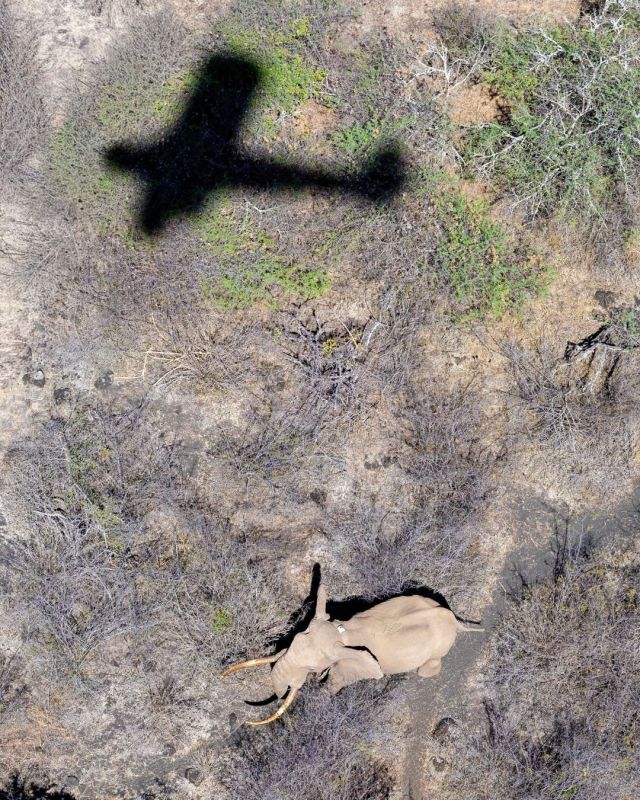
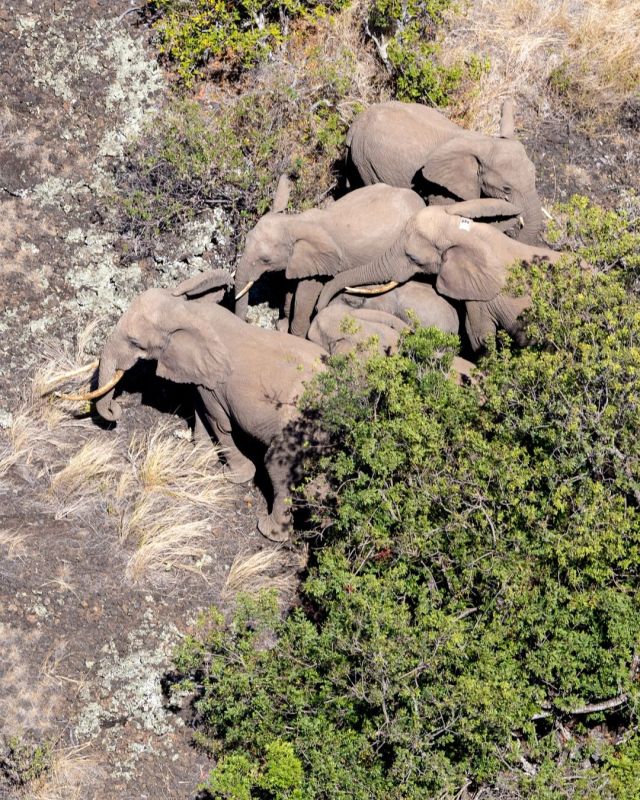


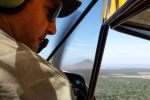
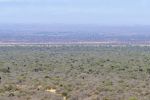
Aerial patrols in an ultralight plane like our Super Cub are one of the best ways to monitor the vast, remote corners of the Greater Amboseli Ecosystem.
The Cub’s-eye view allows us to understand seasonal livestock and wildlife movements, spot suspicious activity like charcoal kilns, poaching camps, and illegal land development, and facilitate large operations like wildlife collaring or translocations.
On a recent patrol over Mbirikani ranch, Craig Millar, pilot and Big Life’s Chief Operating Officer, spotted a herd of around thirty elephants, including three of the four elephants we collared back in 2025.
We estimate there to be around 80 elephants living on Mbirikani. They spend most of their time in the lava forests and thick acacia bushland, getting their water from community boreholes in the dead of night. They are skittish and prone to taking off quickly when approached by people, the opposite of the relaxed, tourist-tolerant herds found in Amboseli.
That’s why being able to keep an eye on them from the sky is so useful.
In the little more than one year of tracking data we’ve gathered, one male travelled down into Tsavo West, but for the most part, these elephants live almost entirely outside of protected areas playing a constant game of chess moving around humans and livestock herds, and both sides coexist with remarkably little conflict.
The more we understand how these elephants use the landscape, the better equipped we are to protect them and the communities they live alongside. Thanks to this data we have gained invaluable insights, which will better inform our ranger activities and habitat protection efforts.
📸: Joshua Clay